Last Updated: November 14, 2026
Quick Summary
A roofing warranty is a written promise that a manufacturer or installer will repair or replace certain roof parts that fail within a set period. In Alberta, hail, chinook winds, heavy snow and freeze-thaw cycles test these warranties hard, so the terms, exclusions and installation requirements decide what you actually receive.
- Check who issued the warranty, what it covers, and what it requires.
- Most roofs carry a manufacturer warranty for materials and a workmanship warranty for installation.
- Confirm the warranty’s hail, wind and snow load terms match Alberta’s conditions.
- Keep dated photos, invoices and inspection records, since missing records can void coverage.
- Report damage quickly and check the claim deadline, as many warranties require notice within a short window.
Table of Contents
- How a Roofing Warranty Works in Alberta’s Climate
- Manufacturer Roof Warranty vs. Workmanship Warranty
- How Alberta Weather Tests Roof Warranty Coverage
- Roof Warranty Coverage and Exclusions
- Roof Warranty Maintenance Requirements
- The Roof Warranty Claim Process, Step by Step
- Booking a Warranty Review for Your Commercial or Residential Roof
- Frequently Asked Questions
How a Roofing Warranty Works in Alberta’s Climate
A roofing warranty is a written promise that a manufacturer or installer will repair or replace certain parts of your roof if they fail within a set period. In Alberta, that promise gets tested hard. Hail, strong chinook winds, deep snow loads and repeated freeze-thaw cycles all push roofing materials to their limits. Iron Shield Roofing works on flat, sloped and metal roofs in Edmonton.
Here is the key point most property owners miss. A long warranty term does not guarantee a payout. The terms, conditions and installation requirements decide what you receive. IKO’s limited warranty, for example, only extends its limited wind-resistance coverage when shingles are installed with roofing nails rather than staples and when the installation requirements are followed closely (IKO Limited Warranty).
Before you rely on any warranty, check three things:
- Who issued it: the manufacturer, the installer, or both
- What it covers: materials, workmanship, or both
- What it requires: installation method, maintenance and inspection records
Manufacturer Roof Warranty vs. Workmanship Warranty
Most roofs carry two separate warranties, and a new home can carry a third. A manufacturer warranty covers the materials, such as shingles, membranes or metal panels. A workmanship warranty covers the installation itself, such as flashing, seams and fastening. The manufacturer usually backs the product, while the roofing contractor backs the labour. On a new home, a statutory new-home warranty adds a builder-backed layer on top of both.
Why does this matter? If a shingle fails because it was defective, the manufacturer is responsible. If water gets in because the flashing was installed wrong, the installer is responsible. Installation errors are a common source of leaks, so a workmanship warranty addresses a key risk area. If the builder hired the roofer, the new-home warranty may be your route to a remedy when the installer is gone.
Ask for all three in writing. A manufacturer warranty alone leaves your installation unprotected, and a workmanship warranty alone leaves you exposed if the contractor stops answering the phone.
Who Is Responsible for What
- Manufacturer: material defects, premature cracking, granule loss, manufacturing flaws in membranes or panels
- Installer: flashing, seams, fastening, improper ventilation, installation method that voids the manufacturer’s terms
- Builder (new home): the roof as part of the completed home, subject to the statutory new-home warranty and its timelines
- Maintenance provider: damage caused by neglected upkeep, which may void coverage
How the Three Warranties Interact
A common pattern is that each layer only responds when the others do not. The manufacturer may deny a claim because the installation did not follow its requirements, which pushes the claim to the installer’s workmanship warranty. If the installer is no longer in business, the builder’s new-home warranty may be the remaining route, but only within its coverage period and only for the parts of the roof it lists.
Watch out: a workmanship warranty is only as good as the contractor’s longevity. Before you rely on a long workmanship term, confirm the company has a track record and ask what happens to the warranty if the business closes.
What the New-Home Statutory Warranty Adds
New homes may come with a statutory new-home warranty. Read the warranty certificate you receive at possession to confirm what is covered, including for the roof, rather than assuming full coverage.
What to Ask Before You Sign
- Which party issues each warranty, and for how long
- Whether the workmanship warranty is transferable to a future owner
- Whether the manufacturer requires a specific installation method to keep coverage valid
- What the builder’s new-home warranty says about the roof specifically
- What records you must keep to keep each warranty alive
IKO Limited Warranty
The three warranty layers differ in what they cover and who backs them, as summarised below.
| Warranty | Covers | Backed by |
|---|---|---|
| Manufacturer | Materials such as shingles, membranes or metal panels | Product manufacturer |
| Workmanship | Installation, including flashing, seams and fastening | Roofing contractor |
| New-home statutory | Roof as part of the completed home, within its timelines | Builder |
How Alberta Weather Tests Roof Warranty Coverage
Alberta weather gives roofs a hard time. Hail can crack or bruise shingles. Winter brings heavy snow loads and extreme temperature swings. Each freeze-thaw cycle lets water seep into small gaps, freeze, expand and widen them. Over time, that cycle lifts and curls shingles and loosens sealant.
Warranties often treat these events differently. Some cover hail damage only if it meets a specific impact rating. Others exclude snow load damage unless the roof was designed for local snow conditions. Read the weather language carefully, because a roof that fails in a normal Alberta winter may fall outside a warranty that assumes milder conditions.
Common Alberta stresses to check against your warranty:
- Hail: impact resistance rating and whether damage must be sudden or can be gradual
- Wind: the rated wind speed and the installation method required to meet it
- Snow load: the design load the roof was built to carry
- Freeze-thaw: whether ventilation and drainage requirements were met
Roof Warranty Coverage and Exclusions
Coverage sounds simple until you read the exclusions. A warranty might promise to cover leaks, but it may also exclude leaks caused by ice dams, hail, or damage from foot traffic on the roof. Exclusions are where most claims get denied.
Watch for these common limits:
- Prorated coverage: the payout drops each year the roof ages
- Workmanship periods: installer coverage often lasts far shorter than the material warranty
- Remedy limits: the warranty may cover repair only, not full replacement
- Conditional coverage: the warranty applies only if maintenance records exist
Hail, Wind and Snow Load Exclusions
Many policies exclude damage from hail, wind and snow load unless specific conditions are met. A common exclusion removes hail damage that is not reported within a set window after a storm. Wind coverage may require a certain fastening pattern. Snow load coverage may depend on whether the roof was designed for the local design snow load.
Read these sections before you sign. If the exclusions cover the very weather you face, the warranty may do little for you.
Roof Warranty Maintenance Requirements
Most roofing warranties require you to maintain the roof. Skipping maintenance is one of the fastest ways to void coverage. Typical requirements include regular inspections, clearing debris from drains and gutters, repairing small damage promptly and keeping written records.
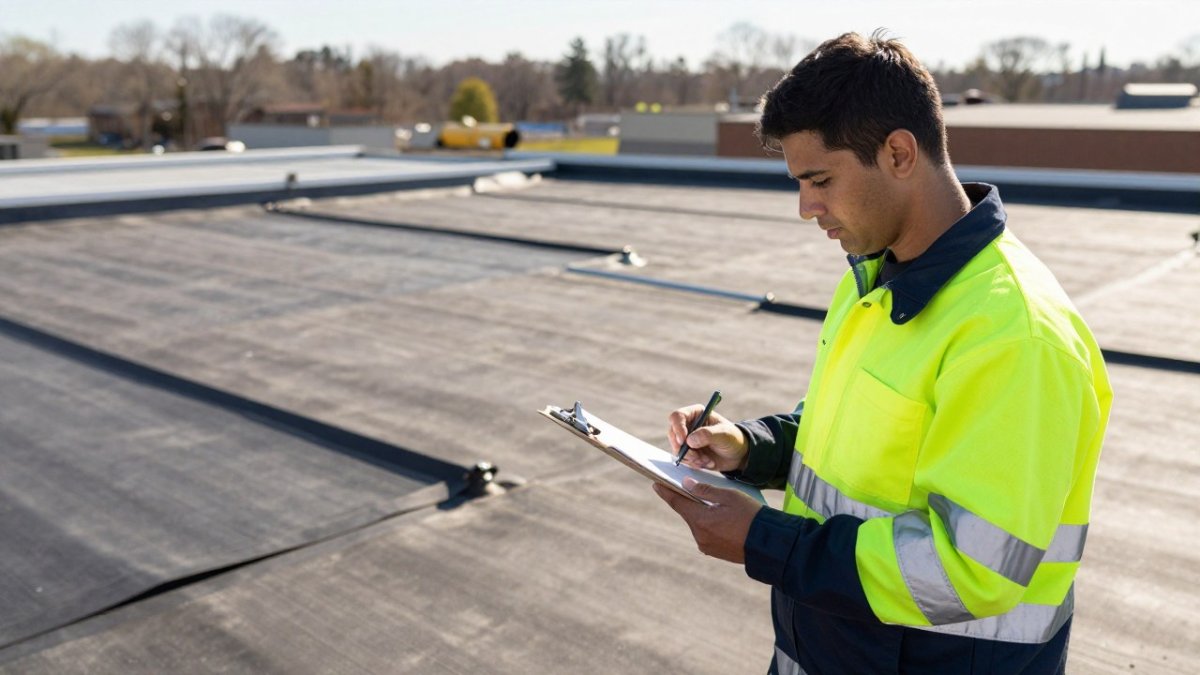
Roofs of different types generally need periodic checks of fasteners, sealants, flashing and ventilation. Keep dated photos and invoices for every inspection and repair. If a claim comes up, those records are often the difference between approval and denial.
- Inspect the roof at least twice a year, plus after major storms
- Clear drains, valleys and gutters before snowfall
- Repair minor damage within the period the warranty allows
- Keep photos, invoices and inspection reports in one file
The Roof Warranty Claim Process, Step by Step
A warranty claim is only as strong as its documentation. Follow these steps to protect your claim.
- Document the damage immediately. Take dated photos and video from several angles.
- Stop further damage. Make temporary repairs if safe, and keep receipts.
- Check the deadline. Many warranties require notice within a short window after discovery.
- Submit written notice. Use the method the warranty specifies and keep a copy.
- Get a professional inspection. A condition report with findings and photos supports your claim.
- Follow up in writing. Confirm every call or meeting by email.
Keep every document in one place. Missing a deadline or lacking photos is the most common reason claims fail.
Booking a Warranty Review for Your Commercial or Residential Roof
If you are unsure what your warranty covers, a professional review can clear things up. Iron Shield Roofing provides flat, sloped and metal roofing services for commercial, industrial and residential properties in Edmonton.
Start with a book a residential roof replacement consultation if your roof is near the end of its life, or request a roof inspection in Calgary to build a clear condition record. Leaks after a storm? Our roof repairs and leak help team can investigate and document the damage so your claim has solid evidence behind it.
Ready to get started? Request a free quote from Iron Shield Roofing.
Frequently Asked Questions
What does a roofing warranty typically cover?
A roofing warranty typically covers defects in the roofing materials or the installation for a set period, such as leaks caused by faulty workmanship or premature material failure. Coverage varies by manufacturer and contractor, so read the written terms. Most warranties exclude damage from storms, foot traffic, lack of maintenance and unauthorized repairs. Ask your Iron Shield Roofing representative for a copy of the specific warranty before work begins, and confirm current pricing and warranty options through a quote.
Does a roof warranty cover hail damage?
Many roof warranties do not cover hail damage as a standard item. Some manufacturers offer limited wind or impact resistance coverage, but it is often conditional on the installation method and the product’s rated performance. Hail damage is also commonly handled through property insurance rather than the warranty. Check the exclusions section of your warranty and ask whether any impact-resistance rating applies to your chosen roofing system in Alberta’s hail-prone conditions.
Can a roof warranty be voided by heavy snow or ice?
A warranty can be voided or limited if snow and ice damage results from conditions outside the stated design load, or from failure to remove heavy accumulation when the warranty requires it. Ice dams caused by poor attic ventilation are often excluded. Keeping records of snow removal and ventilation checks helps protect your coverage. Discuss snow load ratings for your roof system before installation so the warranty and building design match.
How do I start a roofing warranty claim?
Start by documenting the problem with dated photos and a written description of when it was first noticed. Review the warranty for the reporting deadline and the required notice method, which is often written notice to the manufacturer or installer. Keep all maintenance and inspection records, since they are commonly requested during review. Contact Iron Shield Roofing to request a free quote.

