
Last Updated: November 5, 2026
Quick Summary
Prevent flat roof ice dams by keeping drains, scuppers, and downspouts clear so meltwater leaves the roof before it refreezes, sealing air leaks and upgrading insulation to stop heat loss, and clearing snow before it overloads the deck. These three habits stop most winter leaks before they start.
- Ice forms at drains, scuppers, roof edges, and seams on flat roofs, not at the eave.
- Clear snow when depth nears the load limit or you see sagging, cracks, or sticking doors.
- Ponding water lasting more than 48 hours points to a drainage design or deck issue.
- Seal penetrations, curb joints, and wall seams, then upgrade insulation to keep the deck cold.
- Never chip ice with an axe or hammer, which can puncture the membrane.
Table of Contents
- How Do Ice Dams Form on Flat Roofs?
- Flat Roof Snow Removal: When and How to Clear It Safely
- Flat Roof Drainage Maintenance: Keep Drains, Scuppers, and Downspouts Clear
- Flat Roof Insulation and Ventilation: Stop Heat Loss at the Source
- Flat Roof Leak in Winter: How to Respond to an Active Ice Dam
- Prevention Methods Compared: Suitability and Trade-Offs
- Your Winter Roof Inspection Checklist
- Book a Professional Flat Roof Assessment
- Frequently Asked Questions
How Do Ice Dams Form on Flat Roofs?
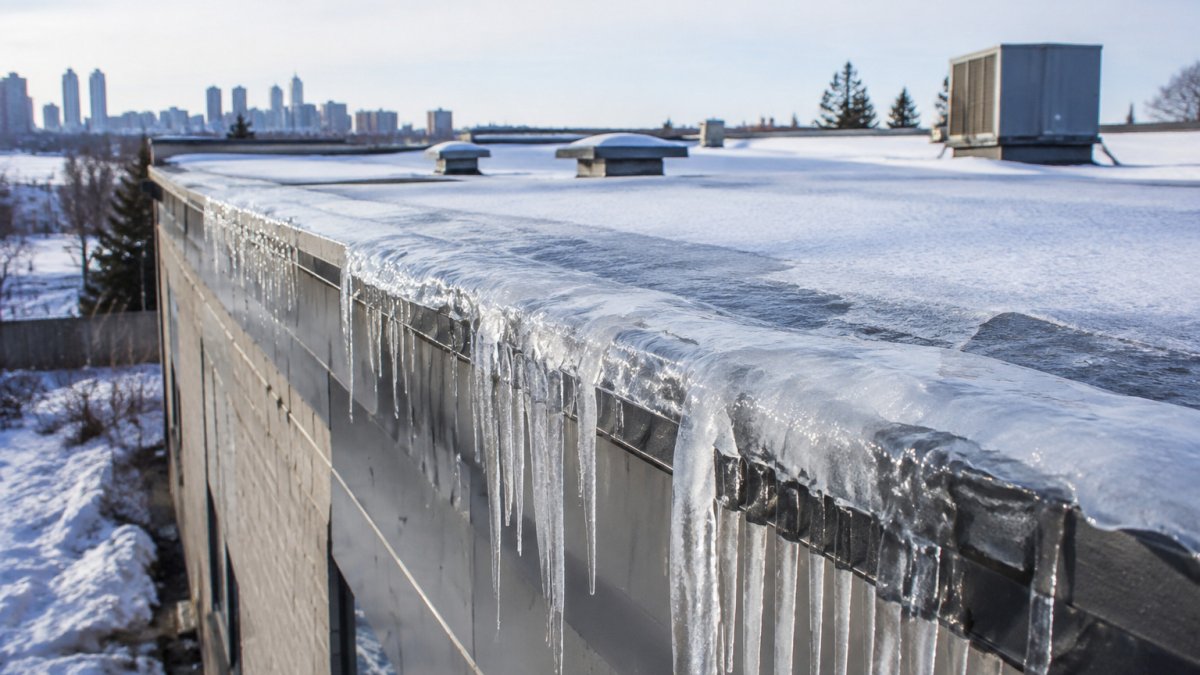
Flat roof ice dams form when snow melts over a warm roof deck, runs to the roof edge, and refreezes into a solid ridge of ice. That ridge traps the next round of meltwater. Water then backs up under the membrane and finds a way inside.
This pattern is common on low-slope buildings during winter. The mechanics are simple. The damage is not.
Why Flat Roofs Are Not Immune
Many owners assume a flat roof cannot grow an ice dam because there is no slope. That is wrong. Most flat roofs carry a slight pitch toward drains or scuppers.
The difference is where the ice lands. On a sloped roof, ice builds at the eave. On a flat roof, ice builds at drains, scuppers, roof edges, and seams.
The Freeze-Thaw Cycle and Standing Water
Alberta winters swing hard. A sunny afternoon softens snow on the roof. Overnight, the temperature drops and that meltwater locks up.
Each cycle adds a layer. Ice grows. Standing water pools behind it. Ponding water is the warning sign most owners miss, because it looks harmless from the ground.
Flat Roof Snow Removal: When and How to Clear It Safely
Clear snow from a flat roof when depth approaches the load limit for the structure, or when you see sagging, cracks, or doors that suddenly stick. Never wait for a leak to start the job.
Warning Signs of Heavy Snow Load
Watch for these signals:
- Sagging or dipping in the roof deck
- New cracks in interior walls or ceilings
- Doors and windows that suddenly jam
The National Weather Service guidance on roof ice dams notes that removing heavy snow lowers both ice-dam risk and roof-failure risk.
Safe Clearing Methods and What to Avoid
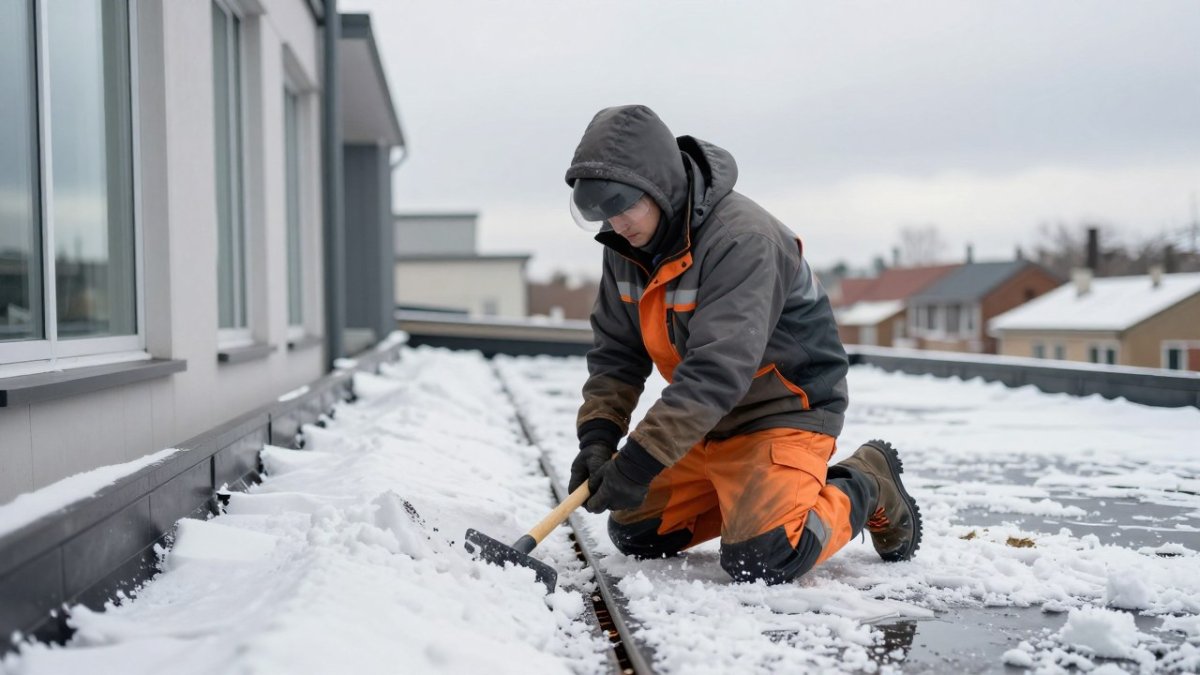
Use a plastic snow rake from the ground where reach allows. Keep metal tools off the membrane. Never chip ice with an axe or hammer.
A common mistake is sending untrained staff onto the roof. Clearing snow without a spotter or fall protection can turn a small problem into a serious injury.
Flat Roof Drainage Maintenance: Keep Drains, Scuppers, and Downspouts Clear
Flat roof drainage maintenance is the highest-value winter task on any low-slope building. A clear drain moves meltwater off the roof before it can refreeze; a blocked one turns the whole roof into a bathtub.
How to Inspect Drains, Scuppers, Internal Leaders, and Low Spots
A proper inspection goes beyond a visual glance. Work through the system from the roof surface down to the discharge point.
- Roof drains: Remove the strainer and check the bowl for debris, ice, or sediment. Standing water around the drain collar can signal a clogged leader below or a settled drain body.
- Scuppers: These open-edge outlets are common ice-dam locations. Check that the opening is clear and the flashing intact; an ice bridge across a scupper can redirect water back onto the roof.
- Internal leaders: If the drain connects to piping inside the building, confirm the leader is not frozen solid. A frozen leader backs water up to the roof even when the strainer is clear. Trace it to its discharge point if accessible.
A common pattern is a drain that looks clear at the surface but has a frozen or debris-packed leader below. That is why inspecting the full path matters more than a quick strainer check.
Distinguishing a Drainage Issue from an Insulation or Heat-Loss Issue
Not every ice dam or ponding problem is a drainage failure. The two causes call for different fixes, and misdiagnosing one as the other wastes money.
- Signs of a drainage issue: Water ponds in specific low spots or around drains even in mild weather; ice forms at drains, scuppers, or seams rather than uniformly; the problem recurs in the same location after clearing.
- Signs of an insulation or heat-loss issue: Ice forms broadly along edges and seams; the roof surface is warm to the touch in spots; interior heat loss is high; ice returns quickly after clearing across multiple areas.
- Overlap cases: A blocked drain can cause local ponding that looks like a heat-loss problem, and poor insulation can overwhelm a well-maintained drain. When both patterns appear, address drainage first because it is faster and cheaper to verify, then assess insulation and air sealing.
If ponding persists after a drain is confirmed clear, the next step is a roof assessment to check deck slope and insulation performance. Our flat roof repair team can trace the cause and recommend the right fix.
Blocked Drain Checklist
Run through this before and during every snow event:
- Remove debris and ice from every roof drain strainer
- Check scuppers for ice bridges
- Confirm downspouts are flowing, not frozen solid
Heated Cables: The Trade-Offs
Heated cables and de-icing wires are a common fix, but the advice is not settled. The Insurance Institute for Business & Home Safety recommends professionally installed heating cables around flat-roof drains. Other industry sources advise against them entirely.
Flat Roof Insulation and Ventilation: Stop Heat Loss at the Source
Flat roof insulation and ventilation control the root cause. Ice dams need warmth escaping through the roof to form. Cut the heat loss and the meltwater stops running.
Air Sealing and Insulation Upgrades
Warm air leaking into the roof space is the usual culprit. Seal penetrations, curb joints, and the seams where the roof meets the wall. Then upgrade insulation to keep the deck cold and even.
A cold roof deck holds snow. It does not melt and refreeze it.
Ventilation and Moisture Control
Roof ventilation carries moisture out of the assembly. Without it, trapped moisture rots the deck from the inside. Combine air sealing with proper venting and you remove both the heat source and the moisture that feeds ice buildup.
Flat Roof Leak in Winter: How to Respond to an Active Ice Dam
A flat roof leak in winter needs calm, fast action. Water is already inside. Your goal is to stop the spread and protect the building, not to fight the ice.
If you are dealing with an active leak right now, our guide on how to get emergency flat roof repair fast walks through the first calls to make.
Step-by-Step Emergency Response
- Contain the water inside. Buckets, tarps, and move valuables clear. Protect electrical equipment and documents first.
- Document everything. Photos of the leak, the ice, and the interior damage help with any claim. Note the date, time, and weather conditions.
- Never climb onto an iced roof. Ponding water can hide thin ice, and flat roof membranes offer uncertain footing even when dry. A fall is the worst outcome.
- Clear what you can safely from the ground. Use a plastic snow rake only. Keep metal tools off the membrane.
- Open a channel if safe. A qualified roofer can cut a small drainage path through the ice to relieve pressure. Do not attempt this yourself; improper cutting can damage the membrane and void warranties.
- Call a professional. For leaks, ponding water, and open seams, our flat roof repair team handles active winter calls.
- Track the melt. Note where water appears so the fix targets the right spot. Water can travel along the deck and appear far from the actual entry point.
Hazards to Avoid
- Do not chip ice with an axe, hammer, or metal tool. This is the fastest way to puncture a flat roof membrane.
- Do not send untrained staff onto the roof. A fall or a membrane puncture costs far more than a professional visit.
- Do not ignore ponding water. Standing water behind an ice dam adds load and can find seams you did not know were weak.
When to Call a Qualified Roofer Instead of DIY
Some situations are beyond general prevention advice. Call a professional when:
- Water is actively entering the building and containment is not enough
- Ponding water is deeper than a shallow puddle or persists more than 48 hours after a melt
- Ice has formed a ridge more than a few centimeters thick at a drain or edge
A qualified roofer can assess the drainage path, check the membrane, and determine whether the ice dam is a drainage issue, a heat-loss issue, or both.
Membrane and Warranty Considerations
Flat roof ice dams often void or complicate membrane warranties. Check the terms before anyone touches the roof. Documented maintenance, including drain clearing, is usually what keeps a warranty valid.
De-icing products and tools can also affect common flat-roof membranes. Rock salt and other chloride-based de-icers can degrade some membrane materials, and abrasive tools can scratch or puncture the surface.
Prevention Methods Compared: Suitability and Trade-Offs
No single method fixes every flat roof. Match the approach to the building.
| Method | Best For | Trade-Off |
|---|---|---|
| Drain and scupper clearing | Every flat roof | Needs a regular schedule |
| Snow removal | Heavy load risk | Labor intensive, safety risk |
| Air sealing and insulation | Heat-driven ice dams | Higher upfront work |
| Roof ventilation | Moisture control | Needs correct design |
| Heated cables | One problem drain | Energy cost, mixed advice |
| Membrane upgrade | Aging roofs | Larger investment |
If leaks keep returning, the real fix is stopping water at the source. Our guide on how to fix recurring roof leaks for good explains why patching alone rarely holds.
Your Winter Roof Inspection Checklist
Inspect before the first deep freeze and again midwinter. A short, consistent check beats one big scramble in January.
- Roof drains, scuppers, and downspouts clear
- No ponding water after a melt
- No ice ridges at edges or seams
Property managers running multiple buildings should put this on a recurring schedule. Our roofing maintenance plans for property managers guide shows how to build one that keeps drains clear year-round.
Book a Professional Flat Roof Assessment
Preventing ice dams on a flat roof comes down to three habits: keep drains clear, keep heat in the building, and clear snow before it overloads the deck. Do those and most winter leaks never start.
When you want a trained eye on the roof before the next cold snap, book a flat roof maintenance visit with Iron Shield Roofing.
Get a free quote from Iron Shield Roofing and protect your building before the ice sets in.
Frequently Asked Questions
Can ice dams form on flat roofs?
Yes. Flat roofs still collect snow, and when warm air from the building escapes through the roof assembly, meltwater refreezes at the colder roof edge. Because flat roofs rely on drains, scuppers, and downspouts instead of gravity-fed eaves, blockages can trap standing water that freezes into ice. The result is the same cycle of ice buildup, water infiltration, and potential roof leak that sloped roofs experience, which is why flat roof ice dams need a drainage-first prevention plan.
How do you prevent ice dams on a flat roof?
Start with flat roof snow removal before accumulation reaches structural limits, then keep flat roof drainage maintenance on a weekly winter schedule. Clear drains, scuppers, and downspouts of ice and debris so meltwater can escape. Improve flat roof insulation and ventilation to reduce heat loss that causes refreezing, and seal air leaks into the roof space. Schedule a professional inspection each fall to catch membrane damage and ponding water before the freeze-thaw cycle begins.
What should you do if water is leaking through a flat roof during winter?
Treat an active flat roof leak in winter as an emergency. First, document the leak and move valuables away from the drip. If it is safe, clear snow from the area above the leak and open any blocked drain or scupper to restore flow. Do not chip ice with sharp tools, which can puncture the membrane. Call a roofing professional for temporary sealing and a permanent repair plan. Prompt action limits water damage and protects the roof membrane.
Can poor insulation cause ice dams on a flat roof?
Yes. Poor insulation lets heat escape from the building into the roof assembly, warming the underside of the membrane and melting snow. That meltwater runs to the colder roof edge and refreezes, forming ice. Combined with air leakage and weak roof ventilation, this heat migration is a leading cause of flat roof ice dams. Upgrading insulation, sealing air gaps, and improving ventilation address the source rather than just the symptom.
Winter will test your roof whether you are ready or not. The buildings that stay dry are the ones with a plan and a crew that knows low-slope systems. Iron Shield Roofing brings flat-roof expertise, tenant-friendly scheduling, and preventative maintenance that holds up to Alberta weather. Get started with Iron Shield Roofing and keep your roof dry all season.

