Quick Summary
To verify roofing contractor insurance, request a certificate of insurance before signing, then confirm the policy is active by contacting the insurer or broker directly. Check that general liability and workers’ compensation are both in place and that subcontractors carry their own coverage.
- Request the certificate of insurance before signing any contract, not after work begins.
- Look up the insurer or broker independently; do not use the phone number on the certificate.
- General liability covers third-party damage, while workers’ compensation covers the contractor’s own crew.
- Confirm the policy is in force on your actual work dates, not just when the certificate was issued.
- Do not let work start if the contractor refuses to provide proof of insurance.
Table of Contents
- Why Verifying Roofing Contractor Insurance Matters on Edmonton Properties
- Step 1: Request a Roofing Contractor Certificate of Insurance
- Step 2: Send a Proof of Insurance Request Email for Contractor Records
- Step 3: Review General Liability and Workers’ Compensation Coverage
- Step 4: Confirm the Policy Is Active With the Insurer or Broker
- How to Check Contractor Insurance Coverage for Crews and Subcontractors
- Roofing Contractor Insurance Checklist and What to Do If Proof Is Refused
- Frequently Asked Questions
Verifying roofing contractor insurance is one of the most important checks a property manager can make before work starts on a commercial roof. A certificate of insurance on file protects the building owner if a crew member is hurt on site or if the work damages neighbouring property. This guide walks through a practical process that works for warehouses, retail plazas, office buildings and multi-family properties.
The steps below focus on what to request, how to read it, and how to confirm it with the insurer or broker.
Why Verifying Roofing Contractor Insurance Matters on Edmonton Properties
Edmonton roofs face freeze-thaw cycles, heavy snow loads and strong wind. When something goes wrong, the question of who is covered can decide whether the cost lands on the contractor or on the property owner.
A roofing company without active coverage can leave you exposed. If a worker falls from a ladder on your property, a missing workers’ compensation account can turn a claim into a dispute about liability. Verifying coverage up front is a simple way to shift that risk back to a licensed, insured business.
Step 1: Request a Roofing Contractor Certificate of Insurance
Start by asking the contractor for a certificate of insurance, often called a COI. This is a standard document that summarizes the policies the company holds and who is named on them.
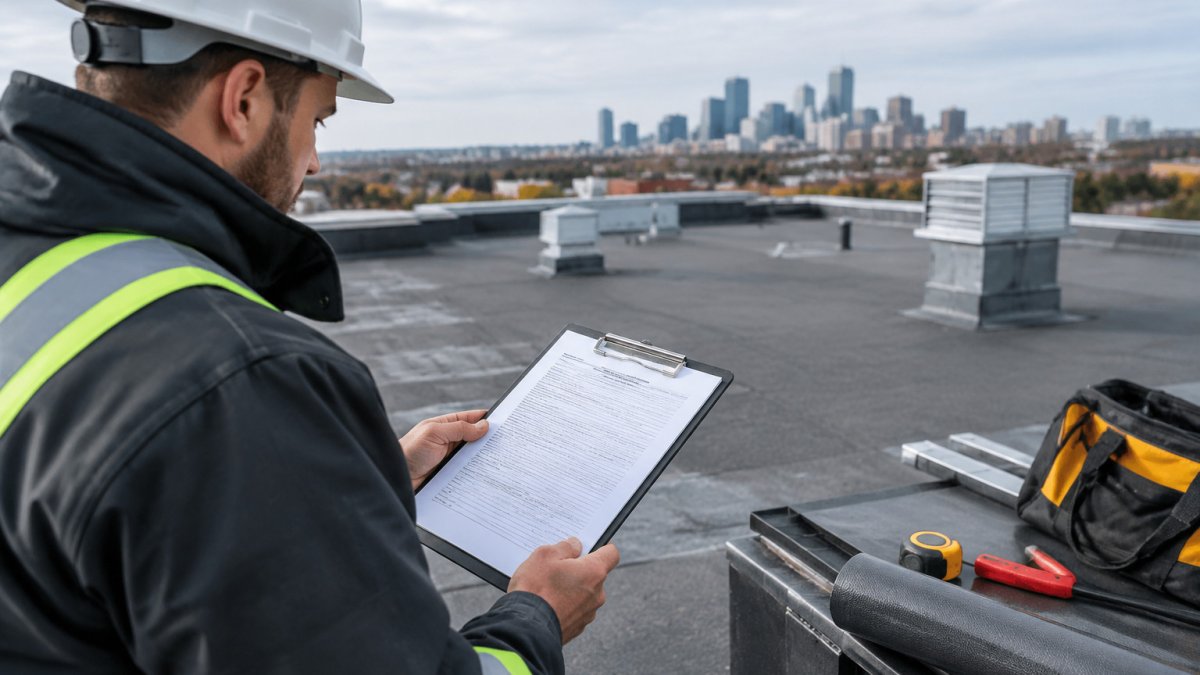
A useful certificate lists:
- The insured company’s legal name
- The insurance carrier and policy numbers
- Policy effective and expiration dates
- Coverage types and limits
- Your building or company as the certificate holder
Ask for the certificate before you sign a contract, not after work begins. A contractor who hesitates at this request is giving you useful information.
Step 2: Send a Proof of Insurance Request Email for Contractor Records
If a certificate arrives incomplete, or you want a formal record, send a short written request. A clear email leaves a paper trail and sets expectations for the response.
Include these points in your message:
- The name of the roofing project and the property address
- A request for current certificates of general liability and workers’ compensation
- A deadline for the response, such as five business days
- A statement that work will not begin until the documents are received
Keep copies of every document and reply. This record matters if a dispute comes up later.
Step 3: Review General Liability and Workers’ Compensation Coverage
Reading the certificate correctly matters as much as having it. Two coverage types matter most for roofing work, and each protects you from a different kind of loss.
General liability responds to third-party claims: bodily injury or property damage the contractor causes to someone else or to someone else’s property. If a roofing material falls and damages a vehicle in your lot, or a crew member damages a neighbouring building’s siding, general liability is the coverage that responds. It typically does not cover damage to the contractor’s own equipment, and it does not cover injuries to the contractor’s own employees, that is what workers’ compensation is for.
Workers’ compensation covers injuries to the contractor’s own workers. Roofing is physically demanding and work at height carries real risk, so this coverage protects your property from claims made by injured crew members. Workers’ compensation coverage is a key protection for crew injuries, and a clearance letter or account-in-good-standing confirmation from the provincial workers’ compensation board can help confirm the account is active.
Roofing-specific coverage details to ask about. These points matter on a roofing project:
- Completed operations coverage. This responds to claims arising after the roof is finished, for example, a leak traced back to faulty workmanship that damages interior contents months later. Ask whether the policy includes completed operations and confirm the limits.
- Subcontractor coverage. Confirm whether the policy covers work performed by subcontractors or only the named insured’s own employees. Many policies exclude or limit coverage for subcontracted work unless the subcontractor carries its own insurance.
- Hot work. Torch-on and other open-flame roofing methods carry fire risk. Ask whether the contractor’s policy covers hot work and whether the crew follows a written hot work permit process.
- Height and roofing activities. Confirm the policy does not exclude roofing, work at height, or low-slope commercial roofing. Some general liability policies carry exclusions that would leave a roofing claim uncovered.
Check the limits against the property’s needs. Larger commercial properties and buildings with high foot traffic or valuable contents usually warrant higher limits than a small residential job. Ask a broker or your property insurer what amount makes sense for your building rather than guessing.
Watch out: A certificate alone is not a guarantee of coverage. It summarizes what the contractor told the insurer, and it can be out of date or incomplete. The certificate tells you what to verify; the insurer or broker confirms whether it is real and active. Treat the certificate as the question, not the answer. To judge whether a roofing company is a trustworthy choice for your home, read how to choose the best roofing contractor.
Step 4: Confirm the Policy Is Active With the Insurer or Broker
A certificate of insurance is a summary document, not proof that coverage exists on the day your crew arrives. Certificates can be expired, altered, issued for a policy that was later cancelled for non-payment, or simply wrong. The only reliable way to confirm active coverage is to verify it directly with the insurer or the broker who issued the policy.
Source the contact details independently. Do not call the phone number printed on the certificate. A forged or altered certificate can list a fake broker number that connects to someone who will confirm anything. Instead, look up the insurance carrier or brokerage on its official website, or search the brokerage name in a provincial or federal business registry, and call the number listed there. If the certificate names a broker you cannot find through an independent search, treat that as a red flag.
Ask the insurer or broker to confirm four things:
- The policy number on the certificate matches an active policy
- The named insured matches the contractor’s legal name exactly, including any operating-as or trade name
- The policy is in force on the dates your roofing work will take place, not just on the date the certificate was issued
- The coverage limits and coverage types match what the certificate shows
If you requested to be named as certificate holder or additional insured, confirm that as well. A certificate holder is typically notified if the policy is cancelled; an additional insured has broader rights under the policy. These are not the same thing, and the difference matters if a claim arises.
Record the verification. Write down the date, the name of the person you spoke with, and what they confirmed. Keep this note with the certificate in your project file. If coverage is later disputed, this record shows you did not simply accept a document at face value.
Watch out: A broker or insurer may decline to confirm details to a third party who is not named on the policy. If that happens, ask the contractor to request a written confirmation letter from the broker directly to you, or ask the contractor to have the broker add you as a certificate holder so you receive cancellation notices. A contractor who cannot or will not facilitate either step is giving you a reason to pause.
When the insurer cannot confirm coverage, do not let work begin. Ask the contractor for a current declarations page (the full policy summary, not just the certificate) and a letter from the broker confirming active status. If the documents still do not line up, treat the coverage as unverified and consider another roofing company. This step takes a few minutes and is the difference between a document and actual protection.
Use this quick reference to see what each check confirms and how often it should be repeated.
| Check | What it confirms | When to do it |
|---|---|---|
| Certificate of insurance | Policies held and who is named | Before signing a contract |
| Written proof request | Current certificates on record | Before work begins |
| Insurer or broker call | Policy is active and matches the certificate | Before work starts, on the work dates |
| Declarations page | Full policy summary and limits | When the certificate is unclear |
| Subcontractor certificates | Each crew’s own coverage | Before any subcontractor sets foot on site |
How to Check Contractor Insurance Coverage for Crews and Subcontractors
Many roofing jobs involve subcontractors, temporary crews or equipment rental companies. Each of these parties should carry their own coverage. A certificate for the prime contractor does not automatically cover the crew that shows up on site.
Ask the prime contractor to confirm in writing that:
- All subcontractors hold general liability and workers’ compensation coverage
- Each subcontractor’s certificate is available for your records
- No one works on site without a valid certificate on file
Keep in mind that the rules for workers’ compensation and licensing differ by province. Confirm with the relevant provincial workers’ compensation board or licensing authority that each company is in good standing.
Roofing Contractor Insurance Checklist and What to Do If Proof Is Refused
Use this checklist before you sign any roofing agreement:
- Certificate of insurance received and dated within the project window
- General liability limits reviewed against the property’s needs
- Workers’ compensation coverage confirmed
- Insurer or broker contacted directly and coverage confirmed active
- Certificate holder shows your building or company
- Subcontractor and crew coverage documented
- Copies saved in the project file
If a contractor refuses to provide proof of insurance, treat that as a serious warning. Do not let work begin. Ask a property manager, insurance broker or lawyer to review your options, and consider choosing a different company that can provide current documents. For guidance on picking a roofing contractor for a commercial building, see how to choose a commercial roofing contractor that lasts.
Verifying insurance takes a little time at the start, but it protects your property, your tenants and your budget through the entire roofing project.
Alberta Workers’ Compensation Board guidance on employer coverage
Insurance Bureau of Canada guidance on commercial liability insurance
Government of Canada information on business licences and registration
Last Updated: November 15, 2026
Frequently Asked Questions
How do I verify a roofing contractor’s insurance?
Ask the contractor for a current certificate of insurance, then contact the insurance broker or insurer named on it to confirm the policy is active. Check the policy number, the effective and expiry dates, and the named insured, which should match the contractor’s legal business name. Confirm workers’ compensation status separately with the provincial workplace safety board. Never rely only on a copy the contractor sends you without checking it directly with the source.
What insurance should a roofing contractor have?
Most property owners should expect general liability coverage for property damage and bodily injury, plus workers’ compensation coverage for crew members. Ask for coverage limits in writing and confirm they meet what your contract requires. If the contractor uses subcontractors, ask whether those subcontractors carry their own insurance and workers’ compensation. Requirements vary by project, so have your property manager or lawyer confirm the minimums your building needs.
What should I do if a roofing contractor cannot provide proof of insurance?
Do not sign a contract or allow work to begin until you have verified coverage. A contractor who cannot produce a current certificate, or who delays sending one, is a significant warning sign. Ask for the name of their broker so you can confirm coverage directly. If verification still fails, consider getting bids from contractors who can provide documented, active coverage and workers’ compensation status.

