Last Updated: November 24, 2026
Quick Summary
The signs your industrial roof needs inspection include active leaks, ponding water that sits for more than a day, blisters, open seams, damaged flashing, rust on fasteners, and interior water stains or wet insulation. Sort symptoms by urgency: emergency, prompt, or routine. A ground-level walk tells you where to look, but only a professional on the roof can confirm what is happening under the membrane.
- Emergency signs include active leaks, torn membrane, sagging deck, bulging wall, and loose perimeter metal.
- Book prompt attention within days for ponding water, blisters, open seams, damaged flashing, or rust.
- Seam failure is the most common breach on single-ply TPO, EPDM, and PVC membranes.
- Fastener back-out is a leading cause of leaks on metal industrial roofs.
- We recommend scheduling professional inspections in spring and fall.
Table of Contents
- Why Industrial Roof Problems Rarely Announce Themselves
- Signs of Commercial Roof Damage You Can See From the Ground
- Industrial-Specific Hazards That Make Inspection Urgent
- Your Industrial Roof Inspection Checklist
- Commercial Roof Inspection Frequency: How Often Is Enough?
- Commercial Roof Maintenance Best Practices for Edmonton Facilities
- Repair or Replace? What a Professional Inspection Reveals
- Book a Professional Industrial Roof Inspection in Edmonton
- Frequently Asked Questions
Why Industrial Roof Problems Rarely Announce Themselves
Most industrial roof failures start small and stay hidden until water is already inside your building. That is the core problem with industrial roofing: the systems are large, the membrane is out of sight from the ground, and the damage develops slowly under snow, sun, and freeze-thaw cycling.
This guide covers what to look for, how often to look, and when to call in a professional.
Signs of Commercial Roof Damage You Can See From the Ground
You do not need to climb onto the roof to catch most problems early. A slow walk around the perimeter with your eyes up will reveal a surprising amount about the condition of a commercial roof.
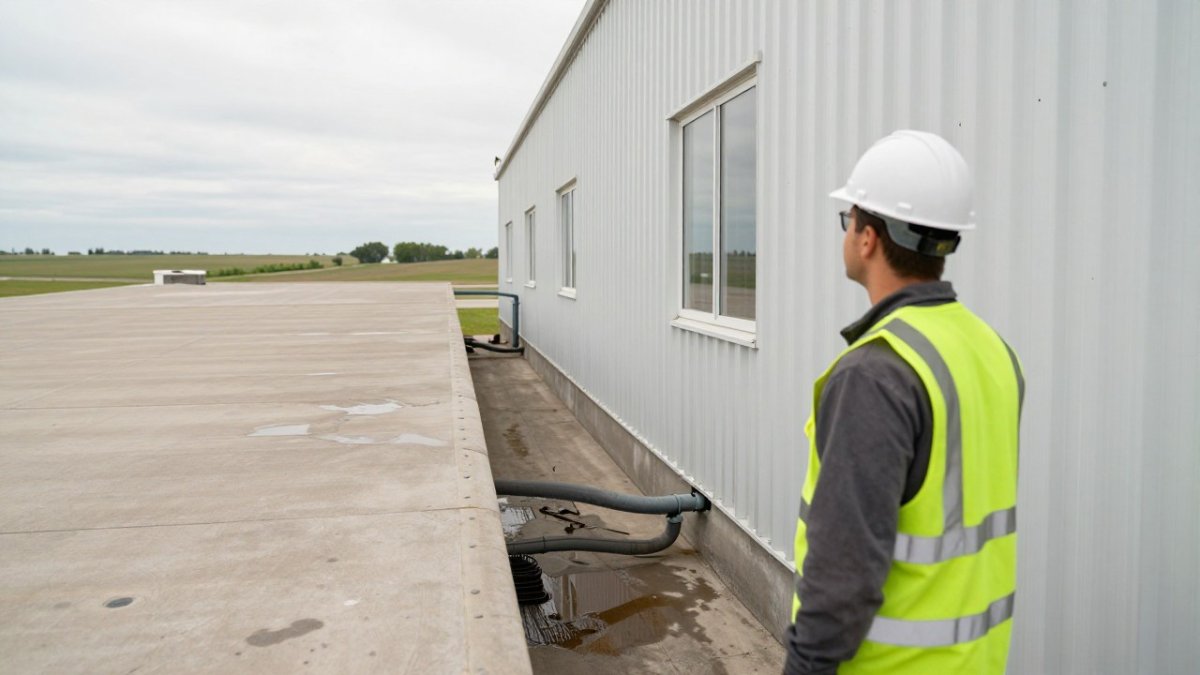
Start with these visible signs of commercial roof damage, sorted by how quickly they warrant action:
- Emergency (act now): active leaks during a storm, exposed openings or torn membrane, visible structural movement such as a sagging deck or bulging wall, or loose perimeter metal that could become a wind-borne hazard.
- Prompt (book within days): ponding water that sits for more than a day after rain, blisters or bubbles in the membrane, open seams, damaged flashing at parapets and curbs, or rust on fasteners and metal edge.
- Routine (log and schedule): minor surface cracking, granule loss on modified bitumen, faded membrane, or small debris accumulation in drains and scuppers.
Treating every symptom as equally urgent is a common mistake. A facility manager who logs a hairline crack and an active leak in the same column loses the ability to prioritize, and the real emergency gets buried.
What the Symptom Tells You About the Roof System
Industrial roofs are not one product. The sign you see from the ground reads differently depending on what is overhead:
- Single-ply membrane (TPO, EPDM, PVC): look for blisters, billowing, seam separation, and shrinkage at edges. Seam failure is the most common breach, and it often shows as a lifted edge or a dark line along the weld.
- Built-up and modified bitumen: look for alligator cracking, bare spots where granules have worn away, ridges, and blisters. These systems age from the top down, so surface texture is your best ground-level clue.
- Metal roofing: look for loose or missing fasteners, lifted panel edges, rust at cut edges and penetrations, and oil-canning or panel distortion. Fastener back-out is a leading cause of leaks on metal industrial roofs.
- Low-slope with ballast: look for displaced ballast, scoured areas after wind, and ponding at low points.
Interior Clues: Water Stains, Recurring Leaks, and Wet Insulation
Interior symptoms are often the first thing a facility manager notices, and they matter because they confirm water is already past the membrane. Look for water stains on ceiling tiles, walls, and structural steel. If leaks keep returning, our guide on how to fix recurring roof leaks for good walks through why patches fail and what actually stops the water.
Surface Clues: Blisters, Cracks, and Ponding Water
On the roof surface itself, the warning signs are physical. Blisters and bubbles form when trapped moisture or air lifts the membrane away from the substrate.
Watch out: a ground-level walk tells you where to look, not what is actually happening under the membrane. Do not let a clean-looking perimeter talk you out of a professional inspection if interior stains or recurring leaks are present.
Sorting visible symptoms by urgency helps a facility manager act in the right order.
| Urgency | Signs to look for | When to act |
|---|---|---|
| Emergency | Active leaks, exposed openings, torn membrane, sagging deck, bulging wall, loose perimeter metal | Act now |
| Prompt | Ponding water over a day, blisters, open seams, damaged flashing, rust on fasteners | Book within days |
| Routine | Minor surface cracking, granule loss, faded membrane, small debris in drains | Log and schedule |
Industrial-Specific Hazards That Make Inspection Urgent
Industrial roofs carry hazards that commercial office roofs do not. Rooftop equipment, exhaust stacks, heavy foot traffic from maintenance crews, and chemical or process exhaust all stress the membrane around penetrations. Add Edmonton’s snow load and freeze-thaw cycling, and small breaches become urgent fast.
The hazards cluster around a few industrial realities:
- Rooftop equipment and penetrations. HVAC units, exhaust fans, stacks, and conduit supports concentrate stress at curbs and flashings. Every penetration is a potential leak path, and equipment vibration loosens fasteners over time.
- Process exhaust and chemical exposure. Exhaust from manufacturing or processing can degrade membrane and metal components faster than weather alone. Discoloration or brittleness near a stack is a sign worth flagging.
- Heavy maintenance traffic. Crews servicing equipment walk the same paths repeatedly, compressing insulation and abrading membrane. Walkway pads help, but worn paths are a common precursor to breaches.
- Snow load and ice damming. Drifted snow concentrates load at parapets and valleys, and freeze-thaw cycling works open seams and flashing. Ice at drains blocks drainage exactly when meltwater arrives.
- Wind uplift at edges and corners. Perimeter metal and edge flashing take the highest wind pressure, and a lifted edge can peel back across a bay.
Classify the Sign Before You Call
Not every symptom needs the same response. Sorting what you see into three levels helps a facility manager act in the right order:
- Emergency, act now. Active leaks during a storm with water entering occupied space, exposed openings or torn membrane where the roof system is compromised, visible structural movement including sagging decks or bulging walls, or loose perimeter metal that could become a wind-borne hazard. These put inventory, equipment, and worker safety at risk and should not wait for a scheduled visit.
- Prompt, book within days. Ponding water that persists more than a day, blisters or open seams, damaged flashing, or rust on fasteners and edge metal. These are not cosmetic, but they are not a same-hour call either.
- Routine, log and schedule. Surface cracking, granule loss, faded membrane, or minor debris in drains. Record these and fold them into the next scheduled inspection.
Safe Inspection: What You Should and Should Not Do Yourself
A ground-level walk is safe and useful. Getting onto an industrial roof is a different matter, and it is where well-meaning facility staff get hurt.
- Fall protection is required (CCOHS: Fall Protection). Industrial roofs often have parapets too low to serve as guardrails, and skylights and roof hatches are fall hazards that can be hidden by snow. Access should be controlled and limited to trained people with proper fall protection.
- Weather conditions matter. Do not walk a wet, icy, or snow-covered roof, and avoid inspections during high wind or electrical storms. Freeze-thaw periods leave surfaces deceptive.
- Some checks belong to professionals. Moisture surveys, core sampling, structural assessment, and anything requiring roof access near equipment or at height should be left to qualified roofing professionals who carry the right protection and know the system.
Watch out: a facility manager who climbs onto a snowy industrial roof to “just take a look” is one of the most common ways a minor roof problem turns into a serious injury. Keep your own checks at ground level and interior, and let a professional handle the roof surface.
Your Industrial Roof Inspection Checklist
An industrial roof inspection checklist keeps your walkthrough consistent, whether you do it yourself or document conditions for a contractor. Use this one:
- Check drains, scuppers, and gutters for debris and standing water
- Walk the perimeter and inspect membrane edges and seams
- Look for blisters, bubbles, cracks, ridges, and wrinkles
- Inspect flashing at parapets, curbs, and every roof penetration
- Check metal components and fasteners for rust
- Look for loose or missing perimeter metal
- Note any sagging, bulging, or soft spots underfoot
- Photograph and date every issue you find
- Check interior ceilings for stains and wet insulation
- Record weather conditions and recent storms
Documentation is the part most people skip. Photos with dates build a history that helps a contractor diagnose whether a problem is new or has been developing for years.
Commercial Roof Inspection Frequency: How Often Is Enough?
Many industrial and commercial roofs benefit from periodic professional inspection, plus a visual check after major storms. Commercial roof inspection frequency also depends on roof age, traffic, and history: an older roof with recurring leaks needs closer attention than a newer one.
We recommend scheduling inspections in spring and fall. If you want a professional on the roof before winter, flat roof maintenance in Edmonton covers scheduling and what the visit includes.
Commercial Roof Maintenance Best Practices for Edmonton Facilities
Preventive maintenance is cheaper than emergency repair every time. The practices that matter most on Edmonton industrial roofs:
- Clear drains and scuppers before freeze-up and after heavy debris
- Keep rooftop equipment clear of snow and ice buildup
- Repair small membrane damage before freeze-thaw cycles widen it
- Limit unnecessary foot traffic and use walkway pads
- Keep a dated photo log of roof conditions
- Schedule professional inspections on a fixed calendar
For a fuller list of maintenance tasks, see our commercial roof maintenance tips.
Repair or Replace? What a Professional Inspection Reveals
A hands-on inspection answers the question a visual check cannot: is this roof repairable, or are you throwing money at a system that is past its service life?
Repair usually makes sense when damage is localized and the roof has service life left. Replacement becomes the better call when moisture is widespread, the roof is aging, or repairs keep returning to the same areas.
Book a Professional Industrial Roof Inspection in Edmonton
The signs above are your early warning system, but only a professional on the roof can confirm what is actually happening under the membrane.
Iron Shield Roofing provides flat, sloped, and metal roofing for commercial, industrial, and residential properties in Edmonton.
Get started with Iron Shield Roofing and book a flat roof inspection before the next season turns a small problem into a major one.
Every industrial roof gives you warning signs before it fails.
Frequently Asked Questions
What are the first signs that an industrial roof needs inspection?
The earliest signs usually show up inside before they show on the roof. Watch for water stains on ceiling tiles, recurring leaks that return after a patch, and rust around fasteners or penetrations. On the roof itself, look for ponding water that stays more than a day after rain, blisters or bubbles in the membrane, and open seams. Any one of these is reason to arrange a professional industrial roof inspection rather than waiting for the next seasonal check.
How often should an industrial roof be inspected?
Most industrial facilities should get a professional inspection twice a year: once in spring to catch winter damage and once in fall before snow load arrives. Buildings with heavy foot traffic on the roof, rooftop equipment, or a history of leaks may need quarterly checks. Commercial roof inspection frequency also depends on roof age; once a membrane passes the midpoint of its expected service life, shorter intervals catch deterioration before it becomes a repair bill.
Can ponding water damage an industrial roof?
Yes. Standing water adds load the structure was not designed to carry indefinitely, and it works its way into seams and flashing over time. Persistent ponding also speeds membrane deterioration and can saturate insulation, which then loses insulating value and adds weight. If water sits for more than 48 hours after rain, check the drains and scuppers first, then have the roof inspected for deflection and membrane damage.
Should facility staff inspect the industrial roof themselves?
Ground-level and interior checks are safe and useful: staff can note water stains, ceiling sag, and visible ponding. Walking the roof is different. Membranes get slippery, skylights and openings are easy to miss, and freeze-thaw cycles leave surfaces unpredictable. A visual inspection from a safe vantage point is fine, but a hands-on assessment of seams, flashing, and insulation should be left to a commercial roofing crew trained for it.

