
Table of Contents
- What Commercial Roof Replacement Costs in Edmonton Actually Include
- Commercial Roofing Materials and Costs: Comparing Flat Membrane Systems
- Factors That Move the Cost of Commercial Roof Replacement in Edmonton
- How to Read a Commercial Roof Replacement Estimate
- Commercial Roof Repair vs Replacement: When Each One Pays Off
- Commercial Roof Replacement Timeline: What a Realistic Schedule Looks Like
- Lifecycle Cost, Warranties, and Phased Replacement Planning
- Frequently Asked Questions
Last Updated: October 21, 2026
What Commercial Roof Replacement Costs in Edmonton Actually Include
The cost of commercial roof replacement in Edmonton is not a single number. It is a stack of line items, and the only way to judge a quote is to know what sits inside it.
Every commercial roof replacement estimate breaks into six core components:
- Tear-off and disposal of the existing roof assembly
- Deck inspection and repairs to the substrate beneath
- Insulation and vapour barrier to meet current building requirements
- Membrane or roofing material itself
- Labour and installation, including access setup
- Overhead, permits, and contingency
Most disputes start when a quote omits one of these. A low number usually means something was left out, not that the contractor is generous.
The Line Items Behind Every Commercial Roof Replacement Estimate
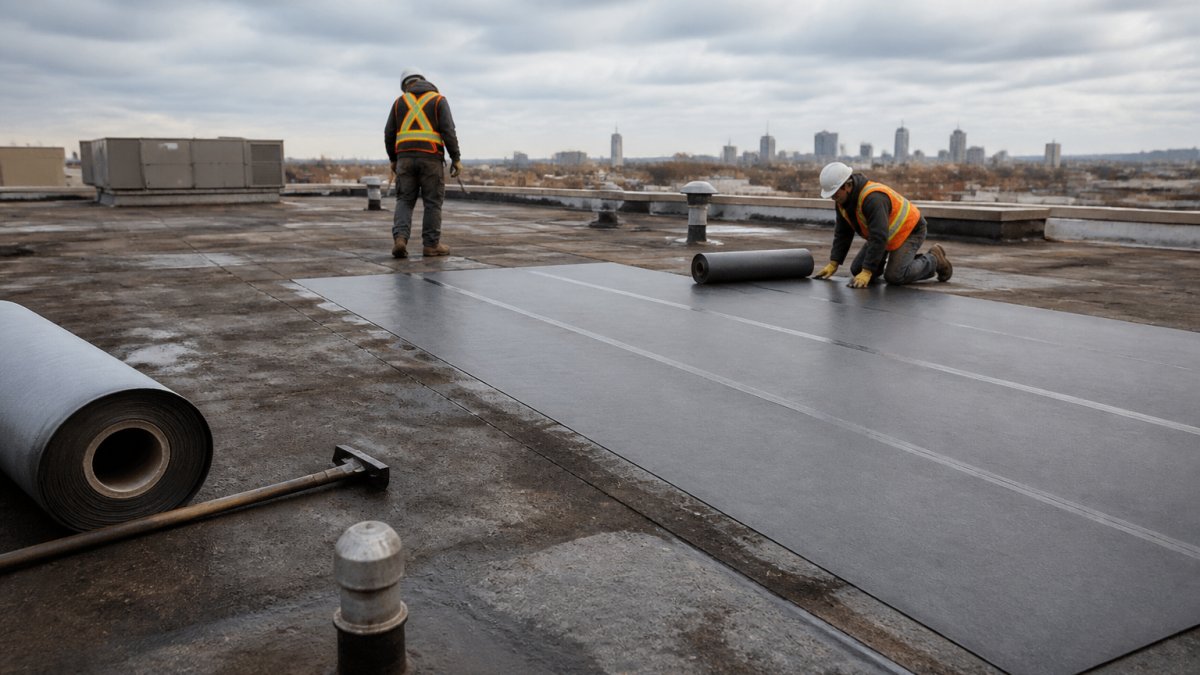
Tear-off is the removal of the existing roof system down to the deck.
Disposal covers bins, tipping fees, and transport. It scales directly with roof area and how many layers come off.
Deck repair is the wildcard. A roof that looks sound from above can hide rotted decking once the membrane lifts.
Insulation and vapour barrier are where code compliance lives.
Membrane and labour are the visible costs. They are also where material choice and crew experience separate one quote from the next.
Commercial Roofing Materials and Costs: Comparing Flat Membrane Systems
Material choice is the biggest lever on installed cost, and it is not a simple “cheap versus expensive” decision.
| System | Typical installed planning range (per square, 100 sq ft) | Typical installed planning range (per sq ft) | Expected service life | Best fit | Watch-outs |
|---|---|---|---|---|---|
| EPDM (ballasted or adhered) | $650-$1,100 | $6.50-$11.00 | 15-25 years | Tight budgets, simple low-slope roofs, easy future repairs | Seam care, UV aging, adhesive quality on cold installs |
| Modified bitumen (torch-on or self-adhered, 2-ply) | $700-$1,200 | $7.00-$12.00 | 15-25 years | Redundant layers, cold tolerance, heavy foot traffic | Open-flame safety, fumes, seam and flashing detail |
| TPO (heat-welded) | $800-$1,400 | $8.00-$14.00 | 20-30 years | Energy reflectivity, heat-welded seams, most commercial retrofits | Installer skill dependent; weld quality is everything |
| PVC (heat-welded) | $950-$1,600 | $9.50-$16.00 | 20-30+ years | Chemical resistance (restaurants, labs), long service life | Higher material cost; fewer trained installers |
| Standing-seam metal (architectural) | $1,200-$2,200 | $12.00-$22.00 | 30-50 years | Long-life institutional, pitched or low-slope with structural support | Structural and fastener detailing; snow-shedding design |
Why the ranges are wide. Two bids on the same building can differ by 40% or more without either being dishonest.
Local climate and code context. Snow load and freeze-thaw cycling drive insulation thickness, fastener patterns, and flashing detail, all of which carry cost.
How to use the table. Ask each bidder to state the system, membrane thickness, insulation R-value, number of tear-off layers assumed, and whether deck repair is an allowance or excluded.
If two quotes differ by more than about 25% on the same scope, the gap is almost always in what was excluded, deck repair, insulation, disposal, or access, not in the membrane price.
Factors That Move the Cost of Commercial Roof Replacement in Edmonton
Access drives cost more than most owners expect. A roof reachable by ladder and staging is cheaper than one needing a crane, hoist, or material lift over an occupied space.
Project complexity adds labour hours: parapet walls, skylights, HVAC curbs, drains, and multiple roof levels all slow a crew down. Alberta’s freeze-thaw cycles and heavy snow loads also demand assemblies built to spec, not value-engineered shortcuts.
Season matters too. Winter work requires cold-process membranes and added protection, and material price increases can hit mid-project.
The most expensive mistake we see is a quote that excludes deck repair and disposal. The number looks lower, then grows once the old roof comes off. Ask for these as explicit line items before you sign.
How to Read a Commercial Roof Replacement Estimate
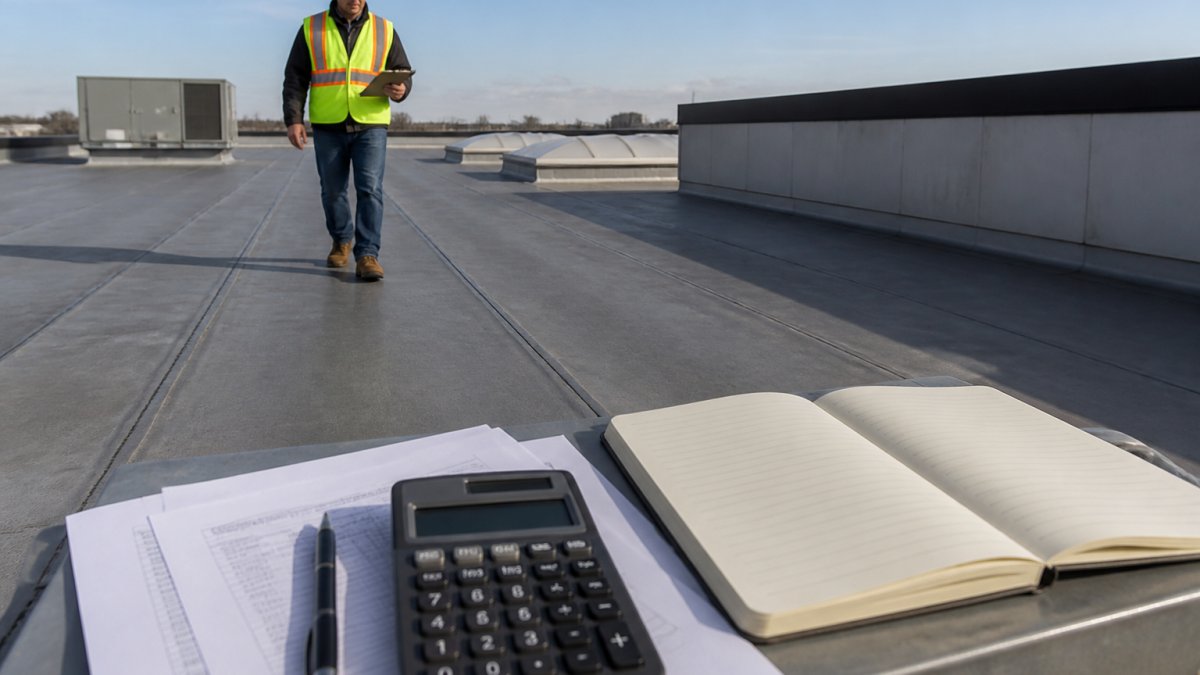
A trustworthy estimate is transparent about what it includes and what it does not. Read every quote against these checkpoints:
- Is tear-off and disposal listed separately?
- Is there a per-unit deck repair allowance?
- Are insulation R-values and vapour barrier specified?
- Is the membrane brand and thickness named?
- Are permits, access equipment, and contingency included?
- Is the warranty term and coverage stated in writing?
If a quote cannot answer these, it is not an estimate. It is a guess with a signature line.
Commercial Roof Repair vs Replacement: When Each One Pays Off
Repair wins when the problem is localized: a failed seam, a punctured membrane, a blocked drain. A targeted fix restores performance at a fraction of replacement cost and keeps the building operational.
Replacement wins when deterioration is systemic: widespread ponding, saturated insulation, multiple active leaks, or a system nearing the end of its service life. At that point, repeated repairs become a subscription to leaks.
We assess the roof’s condition, age, and leak history before recommending either path. The honest answer is sometimes “repair now, plan replacement in two years.”
Commercial Roof Replacement Timeline: What a Realistic Schedule Looks Like
A commercial roof replacement timeline runs from assessment to final inspection in distinct phases:
- Assessment and estimate (1-2 weeks)
- Permits and material ordering (2-4 weeks)
- Mobilization and tear-off (days, scaled to roof area)
- Deck repair and insulation (varies with findings)
- Membrane installation (weather dependent)
- Inspection and warranty handover (1 week)
Weather is the schedule’s biggest variable. Cold-process membranes extend the workable season, and phased scheduling keeps occupied buildings running.
Lifecycle Cost, Warranties, and Phased Replacement Planning
The cheapest roof is rarely the lowest bid. Lifecycle cost weighs installed price against service life, maintenance, energy performance, and the cost of money over time. A system that lasts longer usually wins even at a higher upfront cost, but only if the warranty, maintenance plan, and phasing are set up to actually deliver that life.
Lifecycle cost, worked through
A simple way to compare bids is cost per year of service life, not cost per square. The point is that the comparison has to include service life, maintenance, and energy, not just the bid sheet.
Maintenance is part of the number. A roof with a documented twice-yearly inspection and prompt seam repair routinely reaches the top of its expected range; a roof with no maintenance plan rarely does.
Energy performance. Reflective membranes and added insulation can reduce cooling load and, depending on the assembly, improve snow-melt behavior at drains.
Warranties: read the documents, not the brochure
A material warranty and a workmanship warranty are different documents with different coverage, different exclusions, and different claim processes.
- Material (manufacturer) warranty covers the membrane and accessories against manufacturing defects. Standard coverage is typically in the 10-20 year range; NDL (no-dollar-limit) and total-system warranties extend coverage but usually require the contractor to be an approved applicator and to follow the manufacturer’s specification exactly.
- Workmanship (labour) warranty covers installation defects, seams, flashing, terminations. Term varies by contractor; get it in writing with the start date and the transferability terms.
- Exclusions to check: ponding water, damage from other trades, foot traffic, hail, and failure to maintain. Most disputes come from an exclusion the owner never read.
Ask for both documents before signing, and confirm whether the warranty transfers if you sell the building.
Phased replacement on an occupied building
Phasing spreads capital cost across budget years and keeps tenants, inventory, and operations in place. It works when the roof can be divided into logical zones, by building section, by drainage area, or by tenant bay, and when each phase can be made watertight before the next begins.
A practical phasing plan usually includes:
- Zone map and sequence, which areas go first, and why (worst condition, active leaks, or alignment with a tenant turnover).
- Temporary weather protection, tie-ins, temporary flashing, and nightly seal-up so an unexpected rain or snow event does not reach the interior.
- Occupied-space protection, protection of inventory, ceiling tiles, and equipment below; coordination with tenants on noise, odors, and access.
- Access and staging plan, where materials land, how debris leaves, and how crane or hoist days are scheduled around business hours.
- Budget and warranty alignment, confirm the manufacturer will warrant a phased installation as a single system, and that the workmanship warranty covers each phase from its own completion date.
Phasing only saves money if the tie-ins are detailed correctly. A poorly sequenced phase can void the manufacturer’s warranty on the whole roof, which erases the lifecycle advantage you were planning for.
Financing and insurance
Owners typically fund replacement through operating budget, a capital reserve, or a contractor-offered payment schedule tied to phases. On the insurance side, storm and hail damage may be covered, but wear-and-tear, ponding, and deferred maintenance generally are not, so document roof condition before storm season and keep the inspection records.
The lifecycle question is not “which roof is cheapest?” It is “which roof, warranty, maintenance plan, and phasing schedule gives the lowest cost per year of service without disrupting the business?” Answer that, and the bid comparison becomes straightforward.
For a free quote on your building, our team will walk the roof, map the zones, and build the estimate line by line.
Frequently Asked Questions
How much does a commercial roof replacement cost in Edmonton?
There is no single figure, because commercial roof replacement cost depends on roof area, membrane system, tear-off scope, access, and season. A 5,000-square-foot flat roof and a 10,000-square-foot warehouse roof carry very different totals even with the same membrane. Ask for a line-item estimate that separates material, labour, tear-off, disposal, and overhead so you can compare quotes on equal footing. Iron Shield Roofing provides free quotes with those breakdowns included.
Which commercial roofing materials cost the most and least?
Among flat membrane systems, EPDM and modified bitumen generally sit at the lower end, TPO and PVC land in the middle to upper range, and specialty or high-durability systems cost more upfront. Metal roofing carries a higher installed cost than most flat membranes but can offset it over a longer service life. Material cost is only part of the picture: labour, insulation upgrades, and tear-off often outweigh the membrane price difference on a commercial building.
Can a commercial roof be repaired instead of replaced?
Often yes, if the deck and insulation are sound and the damage is isolated. Commercial roof repair vs replacement comes down to age, how often leaks recur, and whether the existing membrane can take another layer. A roof past roughly two-thirds of its service life with repeat leaks usually costs more to keep patching than to replace. Get a condition assessment before deciding, and ask the contractor to show you the moisture readings behind the recommendation.
How long does a commercial roof replacement take?
Most commercial flat roof replacements run from a few days to several weeks depending on square footage, tear-off volume, weather, and whether the building stays occupied. A commercial roof replacement timeline also includes material lead times and permit steps, which can add weeks before crews start. Phased schedules let occupied buildings keep operating, but they extend the calendar. Ask for a start date and a completion window in writing.
What is the cheapest time of year to replace a commercial roof?
Late spring through early fall is the busiest window, and winter work in Edmonton brings snow removal, cold-weather membrane handling, and slower schedules that raise costs. Booking in early spring or late fall can sometimes land better pricing and faster crew availability. That said, a failing roof should not wait for a discount. Seasonal pricing is a real factor, but water damage and tenant complaints cost more than the difference.
How do I compare commercial roofing quotes fairly?
Put every quote on the same page: roof area measured the same way, the same membrane system and thickness, the same insulation R-value, and the same tear-off and disposal scope. Check what is excluded, such as deck repairs, flashing replacements, or crane access. A low bid that omits tear-off or upgrades is not a lower price, it is a smaller job. Ask each contractor to state assumptions and warranty terms in writing.
Commercial roofs fail on a schedule, and Edmonton’s freeze-thaw cycles do not negotiate. If your building is showing repeated leaks or a system past its prime, waiting only raises the eventual bill. Iron Shield Roofing specializes in low-slope and flat roofing systems engineered for this climate, with crews trained to work around active operations and minimize downtime. Get a free quote from Iron Shield Roofing and get an estimate you can actually read, line by line.