
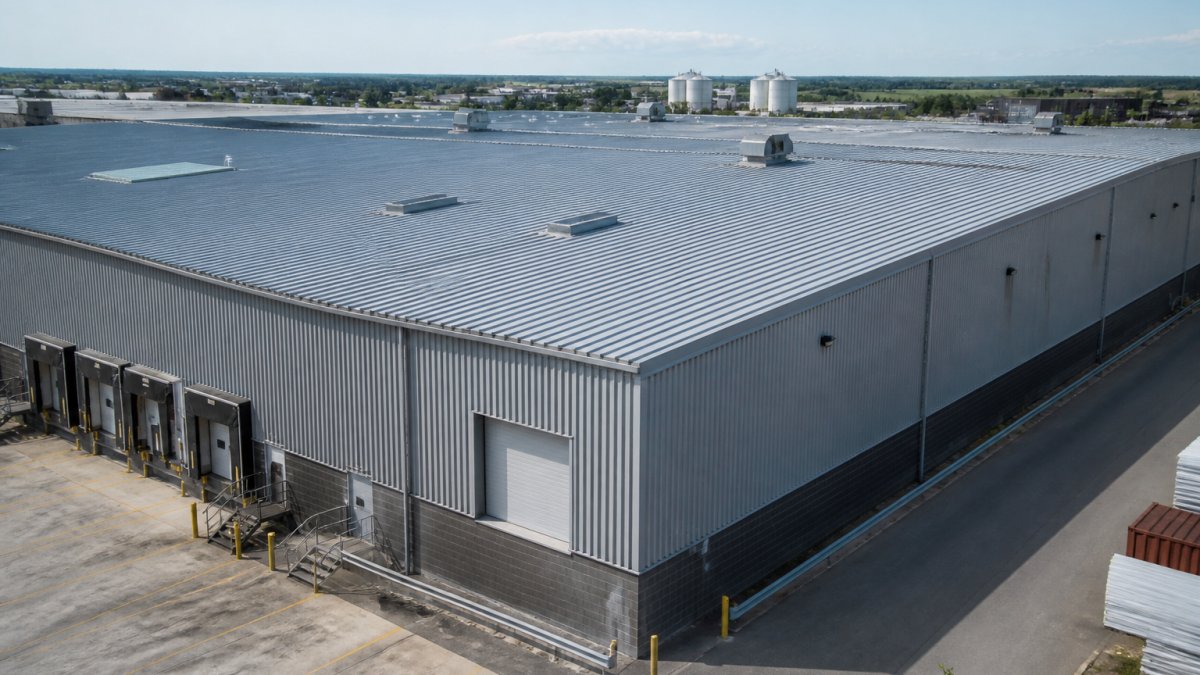
Table of Contents
- Why Durable Roofing for Industrial Warehouses Matters
- Industrial Warehouse Roofing Materials: System Types and Performance
- Warehouse Roof Snow Load: Design and Structural Requirements
- Durability and Service Life: What to Expect
- Industrial Roof Maintenance Checklist: Extending System Life
- Warehouse Roof Replacement Planning: Lifecycle Cost and Retrofit Strategy
- Weather Resistance and Extreme Conditions
- Making the Right Choice for Your Facility
- Frequently Asked Questions
Last Updated: October 14, 2026
Why Durable Roofing for Industrial Warehouses Matters
Durable roofing for industrial warehouses isn’t a luxury, it’s the foundation of operational continuity. A roof failure means halted production, inventory loss, tenant complaints, and emergency repair bills that dwarf preventative maintenance costs.
Industrial facilities face conditions most buildings don’t: freeze-thaw cycles, heavy snow loads, temperature swings, and constant pressure to keep operations running. At Iron Shield Roofing, we’ve seen how the wrong roofing choice becomes a recurring expense rather than a long-term investment.
This guide covers the roofing systems that hold up to industrial demands, how to evaluate them against your facility’s needs, and how to plan a replacement or retrofit that minimizes downtime.
Industrial Warehouse Roofing Materials: System Types and Performance
Industrial facilities demand roofing systems engineered for heavy loads, extreme weather, and minimal maintenance interruptions. Your material choice determines repair intervals, snow and wind performance, and long-term operating costs.
Metal Roofing and Standing-Seam Panels
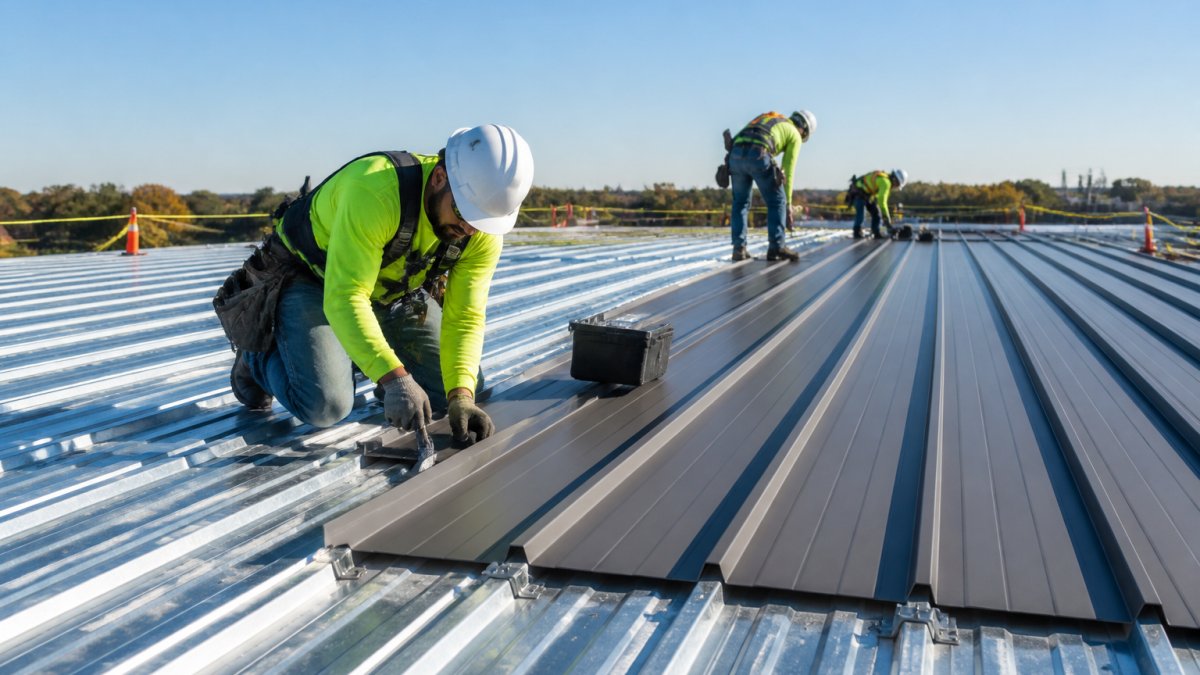
Metal roofing systems, particularly standing-seam panels, deliver exceptional durability for industrial warehouses. These panels lock together mechanically, eliminating the seams and fasteners that typically fail first.
Standing-seam metal roofing performs well in freeze-thaw cycles because the material expands and contracts predictably, and the raised seams shed water and snow efficiently. Panels are typically 24 to 26 gauge steel or aluminum with a corrosion-resistant finish, and they span long distances without intermediate support, reducing penetrations and leak points.
Metal roofs commonly last 40 to 60 years with minimal intervention. Maintenance is straightforward: periodic inspections to keep seams sealed and fasteners tight. Snow load capacity is excellent, and wind uplift resistance is strong.
The trade-off is upfront cost and installation precision. Metal roofing requires skilled crews who understand the material’s thermal movement; poor installation leads to fastener failure and seam separation. Iron Shield Roofing prioritizes installation quality.
Single-Ply Membranes: TPO and PVC
Single-ply membranes, TPO (thermoplastic polyolefin) and PVC (polyvinyl chloride), cover the entire roof surface with a continuous sheet, with seams heat-welded or chemically bonded into a monolithic barrier.
TPO is the economical choice and the default for many industrial facilities, offering good UV resistance, cold-temperature flexibility, and straightforward installation. TPO membranes typically last 15 to 20 years before significant degradation.
PVC is the premium single-ply option: more rigid than TPO, so it handles wind uplift better and resists puncture more effectively. It also maintains flexibility at lower temperatures, performing better in freeze-thaw environments.
Both systems require attention to drainage. Ponding accelerates degradation and can cause membrane failure, so proper roof slope, internal drainage, or tapered insulation is essential.
The advantage of single-ply membranes is installation speed and cost: a large warehouse roof can be covered quickly, with fewer penetrations and leak points.
Built-Up Roofing and Modified Bitumen
Built-up roofing (BUR) is the traditional approach: multiple hot-applied layers of bitumen (asphalt or coal tar) and reinforcing fabric built into a thick, durable assembly. Modified bitumen is a newer variation using polymer-modified asphalt for better flexibility and weather resistance.
BUR systems last 20 to 30 years with proper maintenance and a stable structure. The multi-layer construction provides redundancy: if one layer fails, others still protect. Modified bitumen performs better in freeze-thaw cycles because the polymer modification allows flexing without cracking.
The disadvantage is maintenance intensity. BUR and modified bitumen require regular inspections and periodic re-coating, and foot traffic during maintenance can puncture the membrane, a real cost factor in industrial settings with frequent roof access.
Installation also generates strong odors and requires hot work, complicating scheduling in occupied facilities, and cooling and curing times mean the roof isn’t fully functional immediately.
Warehouse Roof Snow Load: Design and Structural Requirements
Snow load is the critical design parameter for industrial warehouses in cold climates. A roof system must handle accumulated snow plus dynamic loads from wind and freeze-thaw cycles.
The structural requirement depends on your location’s historical snow conditions and roof slope.
Most industrial warehouses are designed for ground snow loads of 2.0 to 2.5 kilopascals, roughly 200 to 250 kilograms per square metre of accumulated snow.
The roofing material itself contributes to total load: metal roofing is lighter, while built-up roofing and insulation add significant weight. A structural engineer evaluates framing capacity and confirms the selected system won’t exceed the roof’s load rating.
Proper snow removal is part of the maintenance strategy. Allowing snow to accumulate reduces the roof’s remaining capacity and can lead to structural failure; regular removal keeps loads within safe limits and prevents ice damming at the roof edge.
Durability and Service Life: What to Expect
Durability is measured in years of service before significant degradation or failure, and roofing systems have very different timelines.
Metal roofing systems commonly deliver 40 to 60 years of service.
Single-ply membranes (TPO and PVC) typically last 15 to 30 years depending on formulation and climate exposure, with TPO at the shorter end and PVC and premium TPO products extending it.
Built-up roofing and modified bitumen last 20 to 30 years with regular maintenance. Without it, exposed bitumen oxidizes and becomes brittle, and the roof develops leaks within 15 years.
Durability isn’t just about material, it’s about installation quality and maintenance discipline: a poorly installed metal roof fails faster than a well-maintained TPO system. At Iron Shield Roofing, we help maximize service life and catch problems early.
Industrial Roof Maintenance Checklist: Extending System Life
Preventative maintenance is the most cost-effective way to extend roof life and avoid emergency repairs.
Inspection Schedule:
- Twice yearly (spring and fall) for visual inspection
- After major storms (heavy snow, high winds, hail)
- Before winter to clear debris and verify drainage
- After any foot traffic or maintenance work on the roof
What to Check:
- Membrane condition: tears, punctures, blistering, or separation
- Seams and fasteners: corrosion, loosening, or separation
- Drainage systems: blockages, damage, or standing water
- Flashing around penetrations: gaps, corrosion, or separation
- Snow and ice buildup: depth, distribution, ice damming
- Insulation condition: exposure, deterioration, or compression
Maintenance Tasks:
- Clear debris (leaves, branches, dirt) from the roof and gutters
- Remove ice dams that block drainage
- Trim tree branches that overhang the roof
- Inspect and repair flashing around pipes, vents, and equipment
- Patch small tears or punctures immediately
- Re-seal seams if heat-welding shows signs of failure
- Pressure wash the roof surface only if the membrane can tolerate it (check manufacturer guidance)
What NOT to Do:
- Don’t allow standing water to persist, it accelerates membrane degradation
- Don’t walk on the roof unnecessarily, foot traffic damages membranes
- Don’t use abrasive cleaning methods that can scratch protective coatings
- Don’t ignore small leaks, they grow quickly in freeze-thaw cycles
Regular maintenance extends service life by 5 to 10 years and catches problems before they become expensive. A $500 inspection and small repair beats a $50,000 emergency re-roof.
Warehouse Roof Replacement Planning: Lifecycle Cost and Retrofit Strategy
Planning a roof replacement or retrofit requires evaluating upfront cost, expected service life, maintenance requirements, and operational disruption.
Lifecycle Cost Framework:
Start with installed cost (material, labor, overhead), then add the present value of maintenance over the expected service life.
Factor in operational disruption: a warehouse shut down for a week during re-roofing loses revenue from halted production and tenant rent.
Include roof-related downtime, temporary repairs, emergency calls, and revenue lost waiting for fixes. A durable system that rarely fails is worth more than a cheaper system that generates frequent disruptions.
Retrofit vs. Full Replacement:
Retrofitting means installing a new system over the existing roof without removing it.
Full replacement involves removing the old roof, inspecting the structural deck, repairing damage, and installing a new system.
The choice depends on the existing roof’s condition, the building’s structural capacity, and your long-term facility plans.
Weather Resistance and Extreme Conditions
Industrial warehouses in cold climates face specific weather challenges that test roofing systems.
Freeze-Thaw Cycles:
Repeated freezing and thawing causes materials to expand and contract, and membranes that can’t flex without cracking fail quickly. Metal roofing handles this well because it expands predictably and seams accommodate movement.
Heavy Snow and Ice:
A roof must support accumulated snow without deflecting excessively. Metal roofing distributes loads efficiently; single-ply membranes rely on proper slope to shed snow, and flat roofs need regular removal.
Wind Uplift:
High winds create negative pressure that can lift roofing materials. Metal standing-seam systems resist uplift because seams lock together and distribute load across the roof.
Hail and Impact Damage:
Hail can puncture membranes and dent metal roofing. PVC resists puncture better than TPO, and metal is durable but can be dented. Inspection after hail storms is essential to catch damage before it leads to leaks.
Making the Right Choice for Your Facility
Selecting the right roofing system requires evaluating your facility’s climate exposure, structural capacity, maintenance resources, operational requirements, and budget.
For Maximum Durability and Minimal Maintenance: Metal standing-seam roofing is the strongest choice.
For Cost-Effective Performance: TPO or PVC single-ply membranes balance cost and durability. Installation is faster, and the continuous membrane reduces leak points.
For Existing Facilities with Structural Constraints: Built-up roofing or modified bitumen may suit structures that can’t handle metal roofing’s weight or need a quick retrofit.
The right choice depends on your priorities. For a high-value warehouse where downtime is costly, durability and reliability justify metal roofing’s upfront investment.
At Iron Shield Roofing, we evaluate your facility’s climate exposure, structural capacity, maintenance capabilities, and operational priorities, then recommend the system that best balances durability, cost, and operational fit.
Getting a free quote from Iron Shield Roofing is the first step. We assess your current roof condition, discuss your operational requirements, and provide a transparent recommendation backed by hundreds of industrial projects across Alberta’s demanding climate.
A durable roofing system is one of the highest-return investments an industrial facility can make. According to Natural Resources Canada’s climate data, Alberta’s freeze-thaw cycles and heavy snow loads demand roofing systems engineered specifically for these conditions. The Canadian Standards Association’s roofing guidelines provide the structural load requirements that govern industrial roof design.
| Roofing System | Typical Service Life | Weather Resistance | Maintenance Intensity | Best For |
|---|---|---|---|---|
| Metal Standing-Seam | 40-60 years | Excellent | Low | Maximum durability and minimal maintenance |
| PVC Single-Ply | 20-30 years | Very Good | Moderate | Balance of cost and performance |
| TPO Single-Ply | 15-20 years | Good | Moderate | Cost-effective coverage |
| Modified Bitumen | 20-30 years | Good | High | Retrofits and budget constraints |
| Built-Up Roofing | 20-30 years | Moderate | High | Existing facilities with structural limits |
Frequently Asked Questions
What is the most durable roofing material for an industrial warehouse?
Metal roofing with standing-seam panels and single-ply membranes like TPO and PVC are among the most durable options for industrial warehouses. Metal systems offer 40-60 year lifespans and excellent corrosion resistance, while single-ply membranes provide 20-30 years with superior flexibility in freeze-thaw cycles. Built-up roofing and modified bitumen systems typically last 15-25 years but require regular maintenance. The best choice depends on your climate, budget, and operational needs. Consult with a roofing specialist to assess your facility’s specific requirements.
How does warehouse roof snow load affect system selection?
Snow load directly determines the structural capacity your roofing assembly must support. Warehouses in regions with heavy snow require roof systems with reinforced insulation, proper drainage design, and metal decking that handles concentrated loads. Your roof assembly must meet local building codes for maximum anticipated snow depth and weight. A structural engineer should calculate your facility’s specific snow load requirements to ensure the chosen system won’t fail under winter conditions.
What should be included in an industrial roof maintenance checklist?
A comprehensive industrial roof maintenance checklist should include quarterly inspections of the roof membrane for cracks or blistering, clearing debris and ponding water from the roof surface, checking all flashing and seals around penetrations, inspecting gutters and drainage systems for blockages, and documenting any damage after severe weather. For single-ply membranes, check for UV degradation; for metal roofing, inspect fasteners and seams. Schedule professional inspections annually and after extreme weather events. Addressing small issues early prevents costly repairs and extends your roof’s service life by years.
How do I plan a warehouse roof replacement to minimize operational disruption?
Warehouse roof replacement planning requires coordination with your operations team and roofing contractor. Schedule work during your facility’s slowest season if possible, and establish clear start and completion dates in your contract. Discuss noise restrictions, parking needs for contractor vehicles, and access routes that avoid tenant or customer areas. Phased replacement over multiple seasons may be necessary for large facilities. Obtain lifecycle cost estimates comparing full replacement versus re-roofing (applying a new membrane over the existing system), as re-roofing can reduce labor time and cost. Always verify warranty coverage and ensure the contractor carries liability insurance.