Last Updated: October 23, 2026
Quick Summary
Flat roof installation involves site preparation, membrane selection and application, and drainage system installation to prevent water pooling and premature failure. Quality flat roof installation protects your investment and can extend roof life to 20+ years in Alberta’s harsh climate.
- Proper deck preparation, membrane bonding, and sealed seams are critical to prevent leaks during freeze-thaw cycles.
- TPO and EPDM typically last 15-25 years; SBS modified bitumen and built-up roofing offer 15-20+ years depending on maintenance.
- Full flat roof installations typically require 2-4 weeks depending on roof size, weather, and whether the building remains occupied.
- Compare quotes on the same membrane system and scope, separating material, labor, tear-off, flashing, and warranty terms.
- Winter maintenance including snow removal and drainage system checks prevents structural overload and water infiltration problems.
Table of Contents
- Why Flat Roof Installation Matters for Your Property
- Understanding the Flat Roof Installation Process
- Flat Roof Installation Cost: What Affects Your Quote
- Flat Roof Repair Timeline: From Inspection to Completion
- Flat Roof Winter Maintenance: Protecting Your Investment
- Material Options: SBS, TPO, EPDM, and Built-Up Roofing
- Choosing a Certified and Insured Roofing Contractor
- Frequently Asked Questions
Why Flat Roof Installation Matters for Your Property
Flat roofs dominate commercial, industrial, and residential properties across the region, yet many owners underestimate how critical proper installation is. A poorly installed flat roof can lead to ponding water, premature membrane failure, and costly leaks within the first few winters.
The difference between a flat roof that lasts 20+ years and one that fails in five comes down to execution. Site preparation, membrane selection, drainage design, and flashing details all compound to determine whether your roof performs or becomes a liability. Understanding quality flat roof installation protects your investment against Alberta’s harsh climate.
Understanding the Flat Roof Installation Process
The flat roof installation process involves multiple critical stages, each building on the previous one. Skipping or rushing any phase creates vulnerabilities that compound over time.
Site Preparation and Roof Deck Assessment
Before any membrane touches the roof, the existing deck must be inspected and prepared.
The deck surface is cleaned to remove debris, old roofing materials, and contaminants so the new membrane bonds correctly.
Once the deck is clean and sound, crews assess drainage patterns and plan drain placement and slope requirements before the membrane goes down.
Membrane Selection and Application
Your membrane choice determines performance, cost, and maintenance. TPO, EPDM, SBS modified bitumen, and built-up roofing each have distinct advantages depending on your building’s needs and climate exposure.
The membrane is applied to manufacturer specifications and local building codes.
Seams are the most critical detail: improperly sealed seams fail first and cause the most damage.
Drainage Systems and Flashing Installation
Flat roofs require engineered drainage to prevent water accumulation.
Flashing, where the roof meets walls, penetrations, and edges, must be installed with precision, since flashing failures account for a significant portion of flat roof leaks.
The drainage system is tested during installation to confirm water flows correctly, catching problems before the roof is sealed and occupied.
Flat Roof Installation Cost: What Affects Your Quote
Flat roof installation pricing is the sum of several measurable inputs. Understanding how each moves the quote helps you compare bids fairly and spot estimates that are too low to be real.
The Inputs That Drive the Price
Roof area and geometry. Most contractors price by the square (100 square feet).
Deck condition and tear-off. A sound deck that can receive new membrane directly is cheapest.
Insulation and slope. Adding insulation or building slope to improve drainage adds material and labor.
Season and scheduling. Work compressed into a short weather window, or emergency scheduling, carries a premium.
What a Quote Should Itemize
A quote you can compare should separate:
- Membrane system, manufacturer, and thickness
- Tear-off and disposal (yes/no, and cost)
- Deck repair allowance and how overages are billed
- Insulation and slope correction
- Flashing, drains, scuppers, and edge metal
- Permits and inspection fees, if applicable
- Labor, equipment, and site protection
- Warranty terms, both manufacturer and workmanship
- Payment schedule and holdback
A single lump sum with no breakdown tells you nothing about whether extras will appear later.
How to Compare Quotes Side by Side
Put every bid on the same page: same membrane, same scope, same warranty length. Then compare:
- Scope completeness, does each bid include tear-off, deck repair, flashing, and drainage?
- Exclusions, what is not covered, and what triggers a change order?
- Warranty, how many years of workmanship coverage, and what voids it?
- Schedule and disruption, how many working days, and how will occupied space be protected?
- Payment terms, how much is due upfront, and is there a holdback until inspection?
The lowest number is rarely the lowest cost once exclusions and change orders are added. A slightly higher bid with a complete scope and clear warranty is usually the better value.
Ask each contractor to quote the same membrane and the same scope in writing. Apples-to-apples bids are the only way to see who is actually cheaper.
For a transparent estimate, contact Iron Shield Roofing with your roof dimensions, current membrane type, photos of any problem areas, and whether the building will be occupied during work. We break quotes into material, labor, and ancillary line items so you can compare them directly against other bids.
Flat Roof Repair Timeline: From Inspection to Completion
Repair timelines depend on scope, weather, and whether your building stays operational. A minor leak repair might take one day; a full replacement spans weeks.
Emergency leak repairs can often be completed within 24-48 hours, stabilizing the situation while a permanent solution is planned. Permanent repairs require proper membrane installation, which cannot be rushed without compromising quality.
Full flat roof installations typically require 2-4 weeks depending on roof size and weather. Iron Shield Roofing coordinates schedules to minimize disruption, communicating timelines upfront and accounting for weather delays and site conditions.
Flat Roof Winter Maintenance: Protecting Your Investment
Winter is when flat roofs face their greatest stress. Snow load, freeze-thaw cycles, and ice dam formation create conditions that expose installation weaknesses and accelerate membrane degradation.
Snow Load Management and Drainage
Heavy snow accumulation on a flat roof creates weight stress on the structure and prevents water drainage. As snow melts and refreezes, ice dams form at roof edges, forcing meltwater back under the membrane.
Proper roof design includes capacity for snow load without exceeding structural limits. Roof drains must remain clear and functional so meltwater drains immediately rather than pooling.
Freeze-Thaw Cycle Prevention
The freeze-thaw cycle is particularly harsh on flat roofs in this region. Water that penetrates the membrane or collects in small gaps freezes, expands, and creates larger cracks.
Quality membrane installation with sealed seams and proper flashing minimizes water entry points. Insulation beneath the membrane helps moderate temperature fluctuations and reduces condensation that can accelerate freeze-thaw damage.
Material Options: SBS, TPO, EPDM, and Built-Up Roofing
Membrane choice is the single biggest decision in a flat roof installation. Each system handles freeze-thaw cycles, snow load, UV exposure, and foot traffic differently, and each carries different maintenance expectations. The right choice depends on your building’s use, roof geometry, budget, and how long you intend to own the property.
TPO (Thermoplastic Polyolefin)
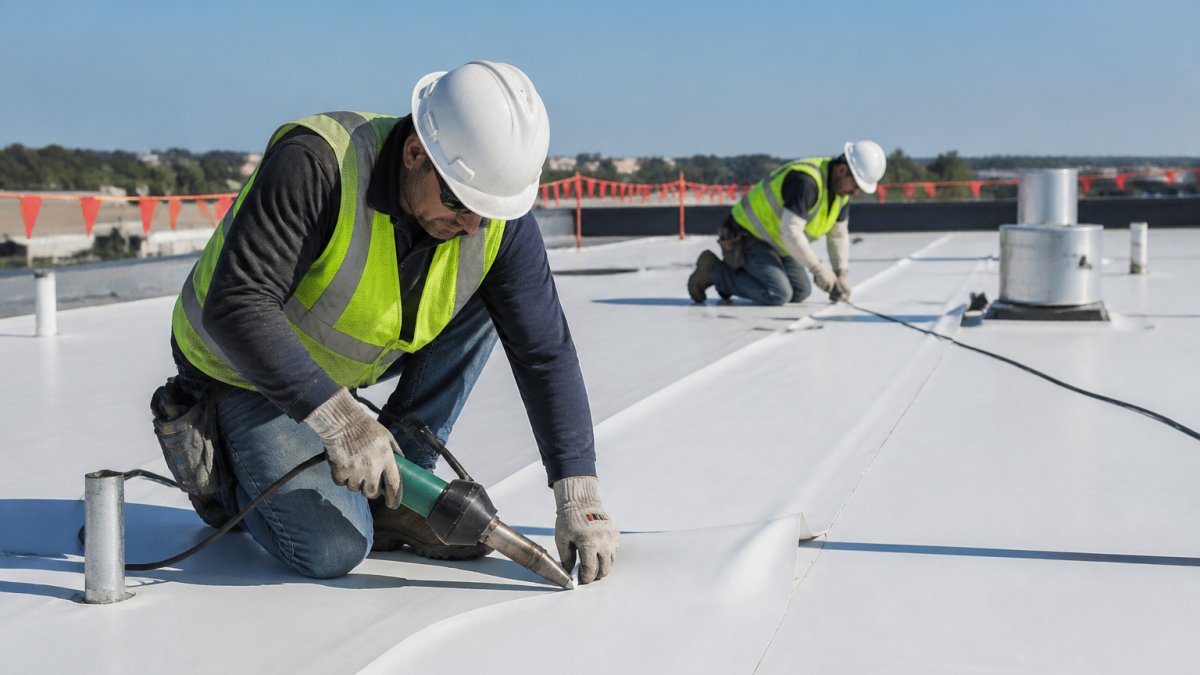
How it works: Single-ply white membrane with heat-welded seams.
Climate fit: The reflective white surface reduces summer heat gain, and the welded seams resist water infiltration during freeze-thaw cycles.
Trade-offs: Seam quality is everything, poorly welded seams are the most common TPO failure point.
Maintenance: Low. Periodic inspection of seams, drains, and flashing is usually sufficient.
EPDM (Ethylene Propylene Diene Monomer)
How it works: Single-ply black rubber membrane, typically seamed with adhesive or tape and secured with mechanical fasteners or ballast.
Climate fit: EPDM stays flexible in cold temperatures, which helps it handle thermal movement through freeze-thaw cycles without cracking.
Trade-offs: The dark surface absorbs heat, which can increase cooling costs in summer.
Maintenance: Low to moderate. Inspect seams and flashings annually, especially after winter.
SBS Modified Bitumen
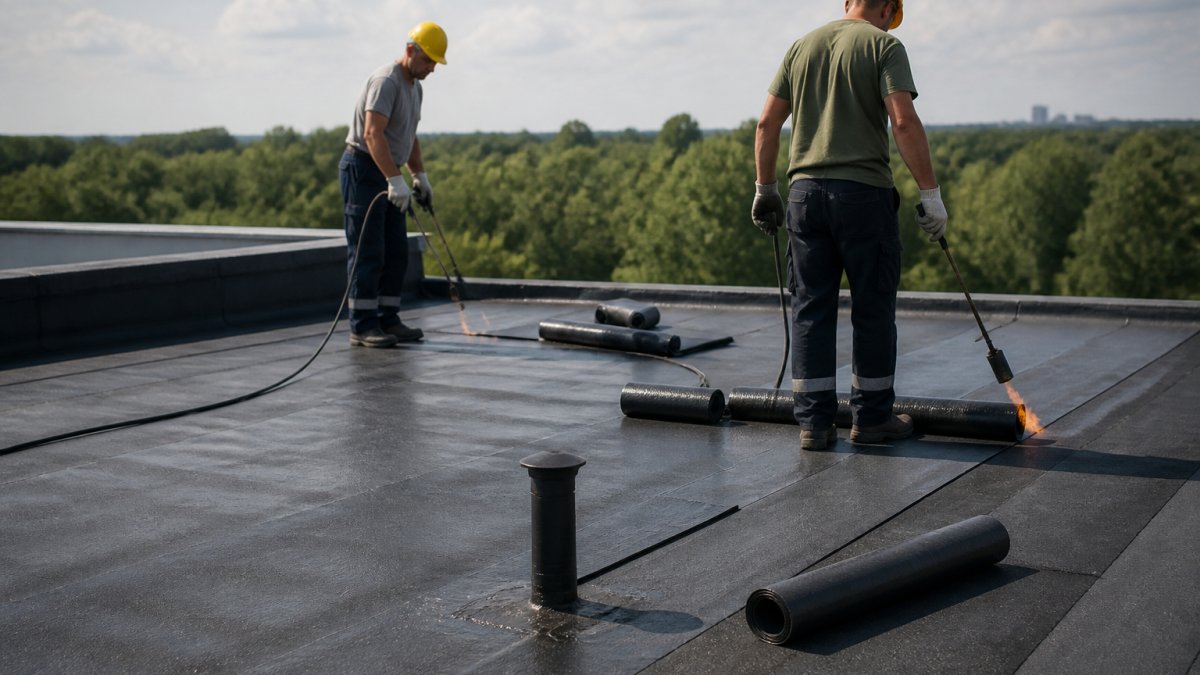
How it works: Asphalt reinforced with rubber polymers, applied in layers, typically a base sheet and a cap sheet, by torch-on or cold adhesive.
Climate fit: The rubber-modified asphalt remains flexible in cold, and the multi-layer build provides redundancy.
Trade-offs: Torch-on work carries fire risk during installation and requires specialized training; cold-applied systems avoid the flame but depend on proper adhesive application.
Maintenance: Moderate. Surface inspection, seam checks, and prompt repair of blisters or splits are important.
Built-Up Roofing (BUR)
How it works: Multiple alternating layers of bitumen and reinforcing fabric, finished with a surfacing layer (gravel or cap sheet).
Climate fit: The multi-layer construction provides proven long-term durability and redundancy, and it has decades of performance history on commercial roofs.
Trade-offs: Installation is labor-intensive and heavy, and the surface can be more difficult to inspect and repair.
Maintenance: Moderate to high. Surface deterioration, blisters, and flashing issues need regular attention.
Quick Comparison
| Material | Typical Lifespan | Climate Strength | Maintenance | Best Fit |
|---|---|---|---|---|
| TPO | 15-20 years | Reflective, welded seams | Low | Budget-conscious commercial and residential |
| EPDM | 20-25 years | Cold flexibility | Low-moderate | Industrial and extreme-weather exposure |
| SBS Modified Bitumen | 15-20 years | Cold flexibility, redundancy | Moderate | Properties preferring multi-layer systems |
| Built-Up Roofing | 20+ years | Proven durability | Moderate-high | Large commercial roofs prioritizing longevity |
How to Choose
Work through these questions before deciding:
- What is the building used for? Occupied commercial space, industrial use, and residential buildings have different traffic and protection needs.
- How complex is the roof? Many penetrations and edges favor systems with reliable flashing details and skilled installers.
- What is the budget versus the holding period? A lower-cost system may be the right call if you plan to sell; a longer-life system may pay back if you intend to hold.
- Who will maintain it? Single-ply systems generally need less routine upkeep than built-up roofing.
- What does the contractor install most often? Installer familiarity with a specific system often matters more than small differences in material specs.
Do not choose a membrane solely on price per square. Seam quality, flashing detail, and installer experience determine whether the system reaches its expected lifespan.
Iron Shield Roofing installs TPO, EPDM, SBS modified bitumen, and built-up systems, and we will recommend the membrane that fits your building’s use, roof geometry, and maintenance capacity, not the one that is easiest to sell.
Choosing a Certified and Insured Roofing Contractor
Your contractor’s qualifications directly determine whether your flat roof installation succeeds or fails.
Verify that your contractor holds proper licensing and certifications for the province (Service Alberta: How it works).
Ask about the crew’s experience with your specific membrane type and climate challenges.
Iron Shield Roofing brings specialized expertise in flat roof systems engineered for Alberta’s harsh climate.
Frequently Asked Questions
How long does flat roof installation typically take?
Installation duration depends on roof size, material choice, and weather conditions. Residential flat roofs often take 2-5 days, while commercial projects may span 1-3 weeks. Preparation, membrane application, flashing, and drainage system installation are sequential phases. Winter conditions can extend timelines due to temperature requirements for certain membranes and reduced daylight hours. A certified contractor will provide a realistic project timeline during your free estimate.
What is the best material for a flat roof installation?
The best material depends on your building type, budget, and climate needs. SBS modified bitumen offers durability and flexibility in freeze-thaw cycles. TPO membrane provides energy efficiency and UV resistance. EPDM rubber is affordable and long-lasting. Built-up roofing delivers proven performance over decades. A qualified contractor will recommend the right membrane based on your specific requirements and local conditions.
Can flat roof installation happen during winter?
Yes, but with important conditions. Most membrane applications require temperatures above 5°C. Cold-process membranes and certain torch-on systems perform better in winter than traditional hot-tar methods. Snow and ice must be cleared before installation begins, and crews must manage moisture carefully. Winter projects may take longer and cost more due to weather precautions and reduced working hours. Discuss winter installation feasibility with your contractor to ensure material selection and scheduling protect your roof’s long-term performance.
How do I prevent leaks on a flat roof?
Leak prevention starts with proper installation: sealed seams, correct flashing at penetrations, and functioning drainage systems prevent water pooling. Regular maintenance, clearing debris, inspecting seams, and addressing ponding water, catches problems early. Winter maintenance is critical: remove snow buildup and ice dams to prevent water backup. Professional inspections every 1-2 years identify wear before leaks develop. Quality workmanship and preventative maintenance together extend roof life and protect your property from costly water damage.
Flat roofs in this region face extreme weather stress that demands precision installation and ongoing maintenance. A properly installed flat roof protects your property for decades. Contact Iron Shield Roofing for a free quote and let our experienced team assess your roofing needs. We’ll explain exactly what your property requires and deliver the quality installation that stands up to Alberta’s toughest winters.
