
Last Updated: October 28, 2026
Quick Summary
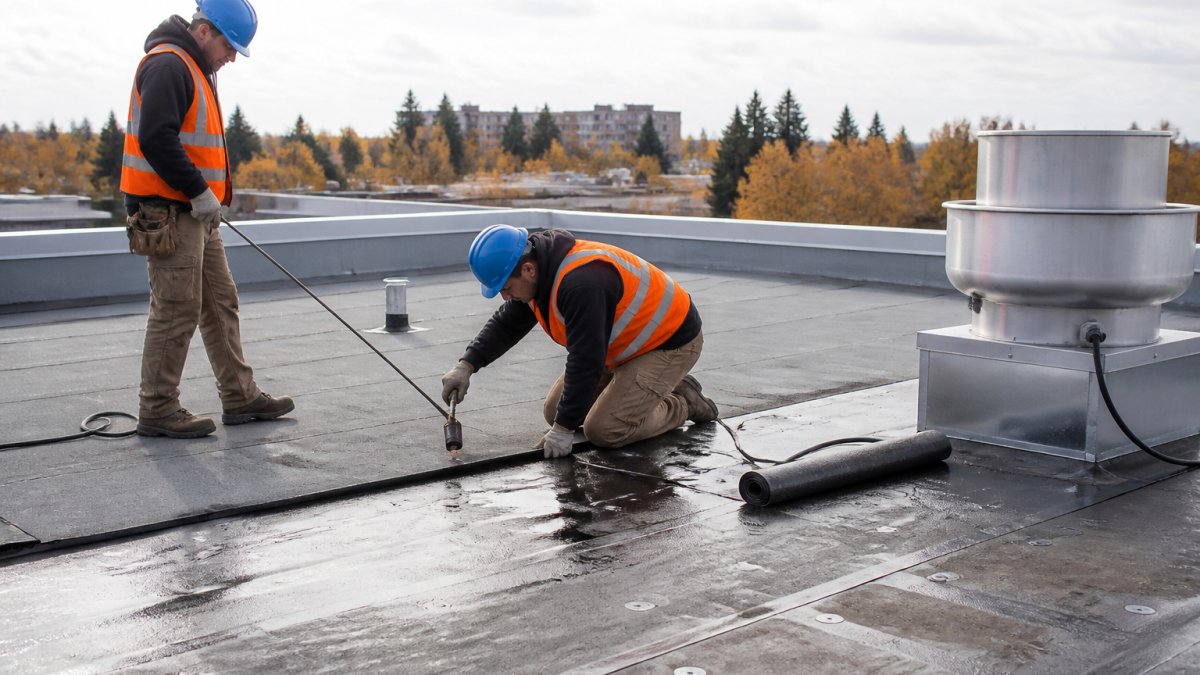
Your business can often stay open during roof repairs by planning work around your operating rhythms, using phased work and agreeing on measurable thresholds with your contractor. Set noise windows, limit how many entrances or docks close at once, and send notices two weeks before mobilization and three days before each phase.
- Map your operating rhythms and busiest hours before the roofing crew arrives.
- Reserve a staging zone away from customer parking and keep fire lanes clear.
- Agree on noise windows, affected work areas, and service interruption limits in writing.
- Send a first notice two weeks before mobilization and a reminder three days before each phase.
- Before reopening a zone, confirm debris is cleared and safety sign-off is recorded.
Table of Contents
- Can Your Business Stay Open During Roof Repairs?
- How Roofing Work Affects Daily Operations
- Building a Commercial Roofing Project Timeline Around Your Operating Rhythms
- Minimizing Operational Disruption During Construction With Phased Work
- Industrial Roof Safety Standards and Occupant Protection
- Weather Contingencies and Temporary Weatherproofing
- Contract Protections and Contingency Costs to Budget For
- Request a Free Quote From Iron Shield Roofing
- Frequently Asked Questions
Can Your Business Stay Open During Roof Repairs?
Preventing business downtime during roof repairs comes down to planning rather than luck. This guide covers ways to keep the doors open while roofing work is underway.
The stakes are real. A roof leak that goes unaddressed can force a sudden closure, ruin inventory, and push tenants toward the exit. Prudent planning is what separates a smooth project from a month of chaos.
Below, we break down the noise, the access issues, the safety rules, and the contract terms that decide whether your operations keep running.
How Roofing Work Affects Daily Operations
Roofing work affects daily operations in three main ways: noise and vibration, blocked access, and safety zones. Each one is manageable with the right work schedule.
The key is to map your operating rhythms before the crew arrives. Know when your busiest hours hit. Know where deliveries land.
Noise, Vibration, and Dust on the Sales Floor
Tearing off membrane and running equipment can create noise.
Scheduling loud work outside busy hours is one approach to consider. Our commercial roof maintenance tips cover ways to prevent repairs from being needed again.
Dust near vents and intake units may be a consideration during tear-off.
Access, Parking, and Delivery Coordination
Access planning is where projects quietly go wrong. A roofing project needs staging space, and that space usually comes out of your lot.
Plan for these before day one:
- Reserve a staging zone away from customer parking
- Confirm where the crew’s vehicles and material drops will sit
- Warn delivery drivers about changed routes and dock access
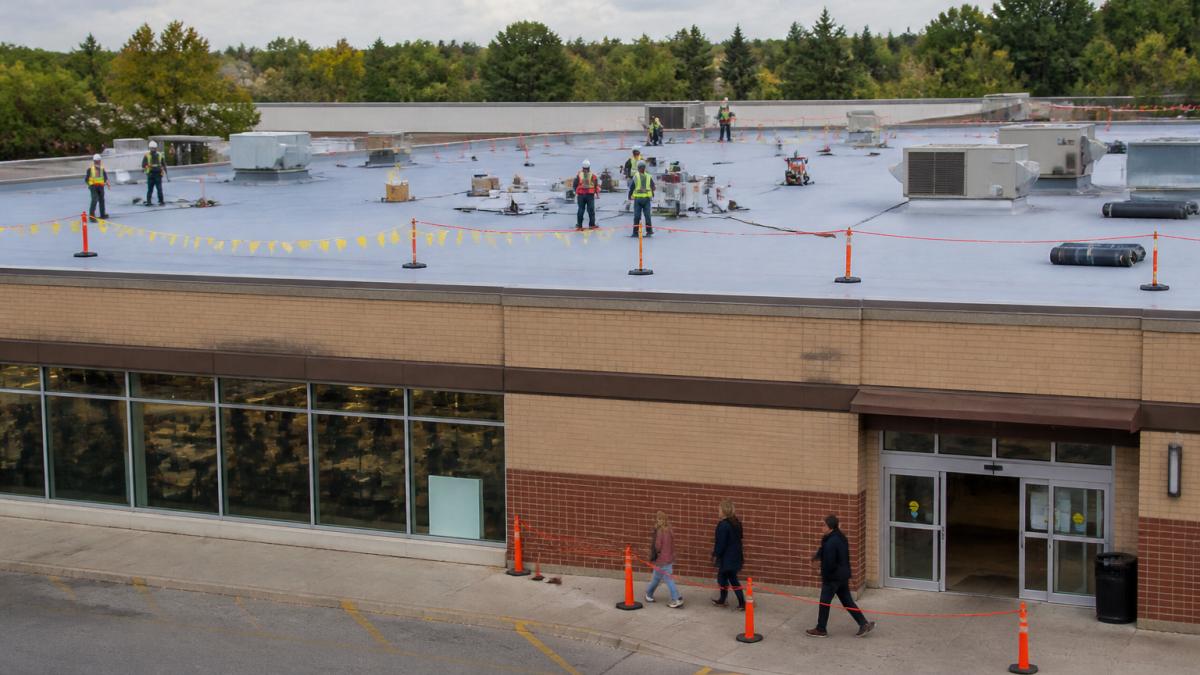
- Keep a clear fire lane and emergency exit path at all times
A common mistake is leaving parking coordination to the contractor alone. Your staff know the traffic patterns. Share them.
Building a Commercial Roofing Project Timeline Around Your Operating Rhythms
A commercial roofing project timeline should take your business calendar into account. Consider your busy season when planning.
Minimizing Operational Disruption During Construction With Phased Work
Dividing a roof into sections is one approach to consider when planning work around operations.
Industrial Roof Safety Standards and Occupant Protection
Industrial roof safety standards exist to protect two groups: the crew on the roof and the people below. Occupant protection is not optional, and it is not the contractor’s job alone.
Ask your contractor about applicable workplace safety requirements before work starts.
A dropped tool or loose sheet of membrane can injure someone below.
If roofing terms come up in these conversations, our glossary of commercial roofing terms and definitions explains the language contractors use.
Weather Contingencies and Temporary Weatherproofing
Freeze-thaw cycles and snow loads are weather considerations for roofing projects.
Contract Protections and Contingency Costs to Budget For
Read the contract terms before you sign. For information about factors that can affect repair estimates, see our guide to commercial roof replacement cost.
Do not sign a contract without understanding its terms.
Decision Thresholds to Agree On Before Work Starts
Measurable thresholds turn a vague continuity plan into a usable one. Agree on these with your contractor and write them into the schedule:
- Noise windows: the hours when loud tear-off and equipment use are permitted, and the hours when only quiet work is allowed
- Affected work areas: the maximum number of entrances, docks, or treatment areas that can be closed at once
- Service interruption limits: how long a customer-facing function can be offline before the phase is paused or resequenced
- Reopening checks: the conditions that must be met before a zone is returned to normal use, such as debris cleared, temporary seal inspected, and safety sign-off recorded
Notification Timeline and Sample Messages
A ready-to-use notification timeline reduces confusion for employees, customers, and vendors. A common pattern is to send a first notice two weeks before mobilization, a reminder three days before each phase, and a same-day notice if a phase changes. Keep messages short and specific:
- Employees: “Roof work on the east zone begins Monday. Use the west entrance; the east lot is closed for staging. Loud work runs 7 to 9 a.m. before opening.”
- Customers: “We are open during roof repairs. Please use the main entrance; the side lot is reserved for the crew through Friday.”
- Vendors and carriers: “Dock 2 is closed Tuesday for roof staging. Deliveries should use Dock 1 between 8 a.m. and 2 p.m.”
Post-Work Inspection and Operational Restart Checklist
A documented handover extends protection beyond the active work. Before you return a zone to normal use, confirm:
- Debris, fasteners, and membrane scraps are cleared from walkways, lots, and exits
- The temporary seal has been replaced by a permanent tie-in and inspected
- Leak checks are complete around drains, penetrations, and HVAC curbs
- HVAC and intake units are clear and running normally
- Safety sign-off is recorded and photos are filed with the daily logs
Good documentation matters too. Keep daily logs, photos, and inspection reports. They protect you if a dispute arises, and they give your insurer a clear record if a weather event or change order is questioned.
Agree on these measurable thresholds with your contractor and write them into the schedule before work starts.
| Threshold | What to agree on |
|---|---|
| Noise windows | Hours for loud tear-off and equipment; hours for quiet work only |
| Affected work areas | Maximum entrances, docks, or treatment areas closed at once |
| Service interruption limits | How long a customer-facing function can be offline before pausing |
| Reopening checks | Debris cleared, temporary seal inspected, safety sign-off recorded |
| First notice | Sent two weeks before mobilization |
| Phase reminder | Sent three days before each phase |
| Same-day notice | Sent if a phase changes |
Request a Free Quote From Iron Shield Roofing
Preventing business downtime during roof repairs starts with planning around your operations.
Our crews specialize in low-slope and flat roofing systems engineered for freeze-thaw cycles and heavy snow loads.
Choosing a contractor is the decision that shapes the whole project. Our guide to commercial roofing companies walks through what to check before you hire.
Request a free quote from Iron Shield Roofing today.
Frequently Asked Questions
Do I need to close my business during a roof replacement?
Whether you need to close depends on the project and site conditions. Discuss potential disruptions with your contractor before work starts.
How can I minimize noise and dust during commercial roofing work?
Discuss noise and dust concerns with your contractor when planning the project.
What safety protocols are required for occupied buildings during roofing work?
Ask your contractor about applicable safety requirements and how occupant access will be managed during the work.
How do contractors manage debris removal without blocking access?
Discuss debris removal, access, and delivery coordination with your contractor when planning the project.
A roof project does not have to mean closed doors. With phased work, a written continuity plan, and a contractor who respects your operating rhythms, your business keeps running while the roof gets fixed. Iron Shield Roofing brings experienced crews, flat-roof expertise built for this climate, and a commitment to minimal disruption. Get started with Iron Shield Roofing and protect your investment without losing a day of business.

